
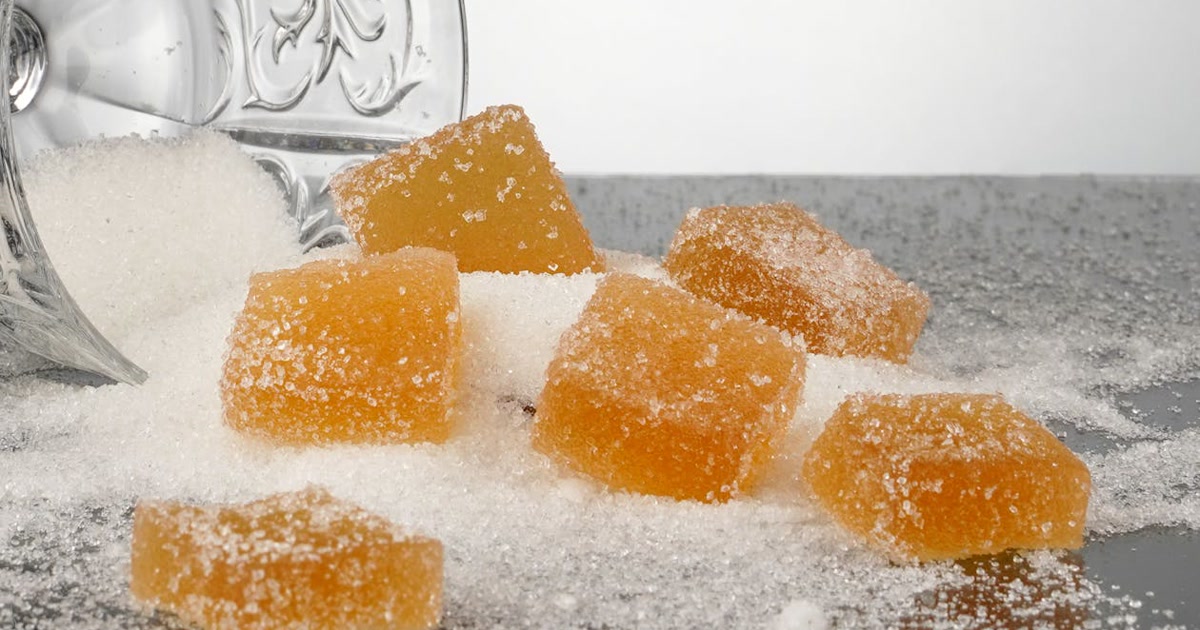
Titanium dioxide (E171) is a white pigment used in candy coatings, chewing gum, and frostings. The EU banned it from food in 2022 after its safety authority could no longer establish a safe daily intake due to genotoxicity concerns. The FDA and Health Canada still permit it. It appears on labels by name.
What is titanium dioxide, exactly?
Titanium dioxide is a white mineral used as a pigment. In food, it makes products look brighter and more opaque (a whiter white, a creamier cream). It's the same compound used to make white paint and sunscreen, though the food-grade version is refined differently.
On ingredient labels it shows up as "titanium dioxide" or by its European code, E171. Because it's tasteless and odorless, it leaves no trace except color. It's purely cosmetic.
Common products that have contained titanium dioxide include powdered sugar coatings on donuts, hard-shell candy (including some M&M coatings), certain salad dressings, chewing gum, and white frosting. It's also found in some supplement capsules and toothpaste.
Why did the EU ban titanium dioxide in 2022?
The European Food Safety Authority (EFSA) published a reassessment of E171 in 2021. Their conclusion: they could no longer establish a safe level of daily intake for titanium dioxide as a food additive. The concern wasn't that it was definitively proven harmful. It's that the available data was sufficient to raise genotoxicity concerns (the possibility of DNA damage), and there wasn't enough data to rule it out.
EFSA's evaluation noted that titanium dioxide particles are poorly absorbed by the gut but do accumulate in tissues when consumed regularly. Some of the particles in food-grade E171 are in the nanoscale range, and the behavior of nanoparticles in the body is an area of ongoing research.
The ban took effect in August 2022. Food manufacturers in EU countries had to reformulate products that previously used E171. The pattern here is similar to what's now happening with synthetic dyes in the US, a combination of research and public pressure eventually forces reformulation, as with Gatorade dropping Red 40 and Yellow 5 in 2026 even without a rule change.
What the FDA says
In the United States, titanium dioxide is classified as Generally Recognized as Safe (GRAS) and is permitted as a food colorant. The FDA limits its use to no more than 1% by weight of the food. This classification has not changed since the EU ban.
Canada follows a similar position: titanium dioxide is listed as a permitted food color with a maximum level of use.
The regulatory gap between the US and EU on this ingredient is real, and it reflects a broader difference in approach: North American regulators generally require evidence of harm before restricting an ingredient, while European regulators are more likely to restrict when uncertainty is high. The same gap shows up with Red 40, where the EU requires a warning label that the US does not.
What does the research actually show?
The research picture on titanium dioxide in food is genuinely mixed, which is part of why the debate persists.
Most rodent studies at high doses have not shown clear toxic effects. However, a subset of studies (particularly those looking at nanoparticle-sized TiO2) have found signs of intestinal inflammation and altered gut microbiota in animal models. Some cell studies have found genotoxic effects, meaning DNA strand breaks, at certain concentrations.
The difficulty is that most of this work is in animals or cell cultures, and the doses used in studies don't always reflect real-world human exposure. Translating rodent research to human risk is imprecise under the best circumstances.
What the EU's EFSA concluded is that the totality of evidence raised enough uncertainty about genotoxicity that they couldn't set a safe daily intake. That's a specific regulatory finding, not a verdict that titanium dioxide causes cancer or disease at typical food exposure levels.
Where titanium dioxide still shows up
In North America, titanium dioxide remains common in:
- White or brightly colored candies with a hard shell coating
- Powdered sugar and products dusted with it
- Some salad dressings and ranch-style sauces
- Certain chewing gums (to keep them white)
- Supplement capsules and tablets (as an opacifying agent)
- Some coffee creamers and dairy alternatives
Some companies reformulated voluntarily even before regulation required it, particularly those selling into the EU market, since they needed compliant formulations anyway. But many products in the US and Canada still contain it. Products carrying titanium dioxide often also carry other industrial additives that would classify them as NOVA Group 4 ultra-processed foods, where purely cosmetic colorants like E171 are a consistent marker.
How to spot it on a label
It's listed by name: "titanium dioxide." Unlike some additives that hide behind multiple aliases (sugar is the notorious example), titanium dioxide is straightforward to find once you know to look for it.
The catch is that most people don't read ingredient lists closely enough to catch it. It tends to appear toward the end of the list, which is where colors and coatings usually land, since they're present in small quantities.
For a category-by-category breakdown of which products in your kitchen are most likely to contain E171 today (and what to swap them for), see our companion piece on titanium dioxide in food: where it shows up and how to avoid it.
Frequently asked questions
Common questions about this ingredient.
What is titanium dioxide (E171) used for in food?
Titanium dioxide is used as a white pigment and opacifier. It makes frosting look pure white, candy coatings look glossy, chewing gum look smooth, and pills uniformly colored. It doesn't change taste, it's purely a visual additive.
Why did the EU ban titanium dioxide in 2022?
The European Food Safety Authority (EFSA) reviewed new evidence on nanoparticle-sized titanium dioxide and concluded that a safe daily intake could no longer be established. Their concern was genotoxicity, potential DNA damage, not a direct cancer finding, but they applied the precautionary principle and removed it from the approved food additive list.
Is titanium dioxide still legal in the US and Canada?
Yes. As of 2026 the FDA still permits titanium dioxide (listed as 'titanium dioxide' or E171) in food up to 1% by weight. Health Canada follows a similar approach. Both regulators have publicly stated they do not find the EU's evidence sufficient to restrict its use.
What foods contain titanium dioxide?
Mostly candies with white or bright coatings (Skittles, Starbursts, M&Ms, gumdrops), chewing gum, some frostings and cake decorations, coffee creamers, salad dressings, and certain pill coatings. It's often hidden under 'color added' on older labels or listed simply as 'titanium dioxide.'
Is titanium dioxide the same as the titanium dioxide in sunscreen?
Same chemical, different particle size and coating. Food-grade titanium dioxide includes nanoparticles that the EU flagged. Sunscreen uses coated nanoparticles designed not to absorb through the skin. The safety profiles are evaluated separately and the EU ban is specifically for ingested nanoparticle exposure.
How do I avoid titanium dioxide?
Read labels, it's always listed by name or as 'color added (titanium dioxide).' Avoid brightly white-coated candies and gums. Most European-version products (same brand, different market) have already reformulated without it. Apps like NoJunk flag titanium dioxide automatically when you scan a label.
The app reads ingredient labels with your camera and flags this and hundreds of other additives in seconds.
