
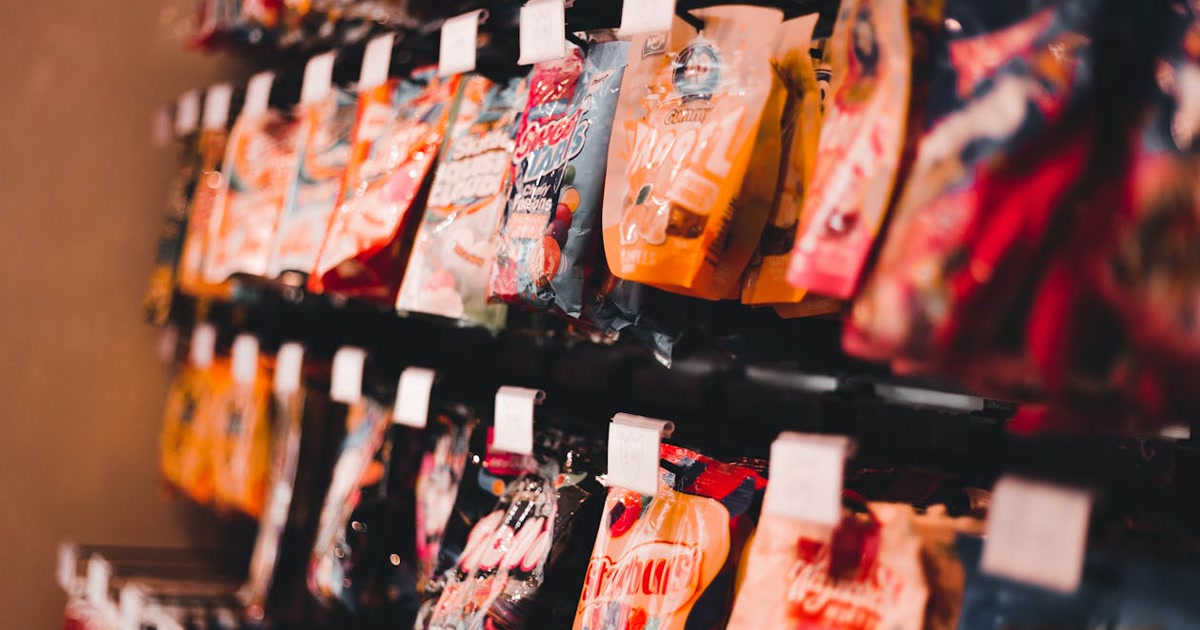
Why is "processed" too vague to be useful?
Almost everything you eat has been processed in some way. Cheese is processed. Frozen vegetables are processed. Bread is processed. Saying a food is "processed" tells you almost nothing useful about whether it's something to be concerned about.
The NOVA classification system, developed by researchers at the University of Sao Paulo, tried to solve this by grouping foods not by their nutrient content but by the nature and degree of industrial processing they've undergone. The insight is that it matters not just what's in food, but what's been done to it. To understand how the NOVA classification works, read our full guide to the system.
The four NOVA groups
Unprocessed or minimally processed foods
Fresh fruits and vegetables, plain meat, eggs, milk, plain yogurt, dried legumes, plain nuts and seeds, pasta, flour, rice.
Processed culinary ingredients
Salt, sugar, oils and fats, butter, vinegar, honey, maple syrup. Not eaten alone. Used to prepare Group 1 foods.
Processed foods
Canned vegetables with salt, cured meats, cheese, freshly baked bread, salted nuts, smoked fish. Made from Groups 1+2 with simple preservation methods.
Ultra-processed foods
Industrial formulations with ingredients rarely used in home cooking: emulsifiers, flavor enhancers, color stabilizers, modified starches, protein isolates.
The defining feature of Group 4 isn't a single ingredient. It's the presence of multiple substances that exist to make industrial food more palatable, longer-lasting, and more visually appealing, rather than to preserve or season it. For a full reference list of which specific foods belong to each group, see the NOVA score food list by group.
A concrete example: most commercial seed oils (canola, soybean, sunflower) are NOVA Group 4 because they're extracted with industrial solvents and refined through high-temperature deodorization. Cold-pressed seed oils, by contrast, use mechanical pressing alone and fall into Group 2. Learn how to identify ultra-processed oils and which ones to swap.
What actually makes a food ultra-processed?
NOVA doesn't draw the line at sugar or salt content. It looks at the ingredient list for signals of industrial processing. Some of the typical markers include:
- Hydrolyzed proteins and protein isolates (soy protein isolate, casein, whey protein concentrate)
- Modified starches (modified corn starch, hydroxypropyl distarch phosphate)
- Hydrogenated or interesterified oils
- Emulsifiers (carrageenan, lecithin, mono and diglycerides, polysorbate 80)
- Artificial and "natural" flavor concentrates
- Flavor enhancers (monosodium glutamate, disodium inosinate)
- Colors, both artificial (Red 40 (a NOVA Group 4 additive), Yellow 5, which major brands are starting to remove) and some natural extracts used at industrial scale
- Sweeteners beyond basic sugar (high-fructose corn syrup, acesulfame K, sucralose, aspartame)
- Bulking and anti-foaming agents
A product doesn't need all of these to qualify. Seeing several of them together, especially substances that a home cook wouldn't have in their pantry, is the signal. Synthetic dyes like Red 40 are among the most visible markers because they serve no nutritional purpose. They exist purely for visual appeal in manufacturing.
The "natural flavors" catch: "Natural flavors" on an ingredient list is a catch-all term that can include a very wide range of flavor compounds. The word "natural" is a regulatory category, not a nutritional judgment. It's one of the markers NOVA uses to identify ultra-processed formulations.
How NOVA differs from other diet frameworks
Most popular diet frameworks focus on what's in food: macros, calories, carbs, sugar, specific ingredient bans. NOVA is different, it focuses on what was done to food. That makes it cross-cut almost every other framework. A Mediterranean diet can be low in ultra-processed food. It can also include plenty of it if you're buying packaged "Mediterranean" products. For a deeper dive, see our guide on NOVA compared to other frameworks. Here's how NOVA overlaps with the frameworks most people have already heard of:
| Framework | What it measures | How it treats NOVA 4 (UPF) | Best for |
|---|---|---|---|
| NOVA | Degree of industrial processing, based on ingredients used and methods applied | Named and flagged as a distinct category to limit | Identifying industrial food vs real food, regardless of nutrient profile |
| Mediterranean | Pattern of foods consumed (olive oil, fish, produce, whole grains, moderate wine) | Indirectly discouraged, doesn't fit the pattern, but not explicitly called out | Long-term cardiovascular health, sustainable eating |
| Whole30 | Eliminates specific categories (sugar, grain, dairy, legume, alcohol) for 30 days | Largely eliminated because most UPFs contain banned ingredients anyway | Short-term elimination + identifying food sensitivities |
| Low-carb / Keto | Macronutrient ratios, low carbs, high fat | Agnostic, a keto bar with 15 industrial ingredients still counts as "keto" | Metabolic goals, blood-sugar management |
| Plant-based | Excludes or minimizes animal products | Agnostic, plant-based "meats" are often NOVA 4 | Environmental impact, certain health markers |
| Calorie counting | Energy intake vs expenditure | Ignores it entirely, treats 200 kcal of chips as equivalent to 200 kcal of almonds | Simple weight-loss accounting; less useful for satiety or long-term adherence |
The practical takeaway: NOVA pairs well with almost any other framework. You can eat Mediterranean and NOVA 1-3. You can eat low-carb and NOVA 1-3. "NOVA 1-3" is a filter that layers on top of whatever else you track.
Common examples
Some Group 4 foods are obvious: packaged cookies, soft drinks, instant noodles, chicken nuggets, flavored chips. But some surprises show up at the boundary:
- Many breakfast cereals marketed as "healthy" or "whole grain" are Group 4 due to added flavor enhancers, colors, and sweeteners
- Flavored yogurts with stabilizers and modified starches
- Most plant-based meat alternatives (high in protein isolates, binders, flavor compounds)
- Packaged whole grain breads with multiple dough conditioners and emulsifiers
- Some granola bars marketed as natural snacks
This is the frustrating part of the NOVA framework: products with good nutrient profiles on paper can still be ultra-processed in the NOVA sense. A high-protein, low-sugar protein bar might contain a dozen industrial additives. The nutrition label doesn't tell you that. The ingredient list does. Other additives worth watching in Group 4 products include titanium dioxide (E171), a whitening agent that the EU banned from food in 2022 but that still appears in North American products.
What does the research actually say?
A significant body of observational research has found associations between high ultra-processed food consumption and a range of health outcomes: higher rates of obesity, cardiovascular disease, type 2 diabetes, depression, and all-cause mortality in some large cohort studies.
The honest caveat: these are associations, not proven causal relationships. People who eat a lot of ultra-processed foods also tend to have different overall diets and lifestyles. Disentangling the specific contribution of ultra-processed foods from the broader context of someone's diet is genuinely difficult.
The exception is the 2019 NIH controlled-feeding trial by Kevin Hall's team at the National Institute of Diabetes and Digestive and Kidney Diseases. This was a randomized crossover study where 20 adults stayed in a metabolic ward for four weeks and ate either an ultra-processed diet or a minimally processed diet of matched calorie density, sugar, fat, fiber, and macronutrients. Participants could eat as much as they wanted of what was offered.
The 2019 NIH trial headline finding: Participants ate roughly 500 more calories per day on the ultra-processed diet than the minimally processed one. They gained about 1 kg in two weeks on UPFs; they lost about 1 kg in two weeks on the minimally processed diet. Same hunger and satisfaction ratings. Same macronutrient menu on offer. The only variable was ultra-processing.
The NIH trial is not conclusive on its own, 20 people is a small sample, and a metabolic ward is not real life. But it's the strongest direct evidence that ultra-processing itself, independent of macros, affects how much people eat.
What researchers think the mechanism might be: Beyond individual nutrients, ultra-processed foods may disrupt satiety signals (you eat more before feeling full), alter the gut microbiome due to emulsifiers and additives, and deliver high caloric density with low fiber and low water. Several large cohort studies, including NutriNet-Santé (105,000 French adults) and UK Biobank (~200,000 participants), have found roughly linear associations between UPF share of diet and adverse outcomes, with each 10% increase in UPF share linked to ~12-14% higher cardiovascular risk. Behavioral effects are also documented: Red 40 hyperactivity evidence in children comes from a 2007 Lancet study, where researchers found that food dyes combined with preservatives were linked to increased hyperactivity, a mechanism that's still being investigated.
The research isn't fully settled. But the volume of studies pointing in the same direction, across different populations and countries, plus the one good controlled trial, has been enough for dietary guidelines in Brazil, France, Canada, and Israel to explicitly recommend limiting ultra-processed food intake. The US Dietary Guidelines still use the broader "processed" category, a framing researchers increasingly consider inadequate.
NOVA's limits
The NOVA system is a useful lens, not a perfect one. A few honest limitations:
Some foods in Group 4 are not clearly worse than their Group 3 equivalents. A fruit yogurt with some added pectin and natural flavor may not be meaningfully different from a plain yogurt you season yourself. Group 4 is a category, not a verdict on every individual product in it.
Nutrient density still matters alongside processing level. An ultra-processed food high in whole grain, fiber, and protein might have different effects than one built around refined flour and fructose syrup, even if both land in Group 4.
And the classification requires reading ingredient lists, which most people don't do in detail. The typical front-of-pack labeling gives you no signal about NOVA group at all.
The app reads ingredient labels with your camera and shows you every additive in seconds.

A grocery-store walkthrough
Instead of memorizing ingredient lists, it helps to have a mental map of where each aisle typically lands on the NOVA spectrum. This is rough but actionable:
The produce section (NOVA 1)
Almost everything here is Group 1. Fresh fruit, fresh vegetables, fresh herbs, bulk nuts and seeds. The exception: pre-cut, pre-washed, pre-seasoned mixes with dressing packets often slide toward Group 4 if the dressing contains emulsifiers and flavor enhancers.
The meat and dairy counters (NOVA 1-3)
Plain cuts of meat, whole eggs, plain milk, plain yogurt, and unprocessed cheeses are Group 1 or 3. Pre-marinated meats, flavored yogurts with modified starches, and processed cheese slices ("cheese food product") jump to Group 4.
The dry-goods aisles (mixed)
Plain rice, plain pasta, plain oats, dried beans, flour, canned tomatoes, olive oil, vinegar, Group 1, 2, or 3. Instant noodles, flavored rice mixes, seasoning packets, pancake mixes, instant soups, and most breakfast cereals marketed as "healthy", Group 4.
The frozen section (mixed)
Plain frozen vegetables and plain frozen fruit are Group 1. Frozen ready meals, frozen pizza, most frozen breakfast items, and "heat and eat" proteins are Group 4.
The bakery (NOVA 3 or 4)
Freshly baked bread with a short ingredient list (flour, water, yeast, salt) is Group 3. Packaged whole-grain bread with dough conditioners, emulsifiers, and preservatives is Group 4, even when marketed as healthier.
The snack and drink aisles (mostly NOVA 4)
This is where the highest density of Group 4 sits: soft drinks, energy drinks, flavored waters with sweeteners, packaged cookies, crackers, chips, candy, protein bars. The "health halo" products (whole-grain, low-sugar, organic) in these aisles are usually still Group 4.
Why NOVA matters beyond nutrition alone
NOVA's usefulness is bigger than its food-pyramid implications. It also gives you a framework to make sense of recurring food-safety debates. The additives that get called out one at a time, Red 40, Yellow 5, titanium dioxide, BHA/BHT, potassium bromate, are almost exclusively found in Group 4 products. When a major brand reformulates to remove one of these additives, the product usually stays Group 4 because the other industrial markers stay in place. The swap is marketing-visible but doesn't change the NOVA classification.
Understanding this lets you skip a lot of cyclical debate about individual ingredients. The question "is this specific additive safe?" is real but narrower than "is this food category worth building meals around?" NOVA's answer to the second question is structurally skeptical, regardless of which specific additive is today's controversy.
How to use this in practice
The most useful thing NOVA offers is a shift in what to look at. Instead of only tracking calories or macros, look at whether the ingredient list contains substances that exist purely for industrial reasons: to extend shelf life, improve texture consistency at scale, prevent separation, or boost flavor at lower cost than real ingredients.
A short ingredient list is usually a good sign. Ingredients you recognize as food rather than chemistry is another. That's not a perfect rule, but it's a faster heuristic than memorizing which additives to watch for.
One common blind spot: gluten-free ultra-processed foods are often more processed than their conventional counterparts, not less. Removing gluten forces manufacturers to rebuild texture with xanthan gum, modified starches, and emulsifiers. The gluten-free label answers one question about allergens. It answers nothing about processing level.
A reasonable practical target: keep Group 4 foods under roughly 20% of your daily calories. That's enough headroom to absorb social meals and occasional convenience without treating UPFs as the main foundation of your diet.
The app reads ingredient labels with your camera and shows you every additive in seconds.
Frequently asked questions about ultra-processed food
The questions people ask once they realize "processed" doesn't mean what they thought.
What does "ultra-processed" actually mean?
Ultra-processed foods are industrial formulations made mostly from substances extracted from foods (oils, fats, sugars, starches, protein isolates) plus additives like emulsifiers, colorings, flavorings, and preservatives. They're NOVA group 4. If your grandmother wouldn't recognize half the ingredient list, it's probably ultra-processed.
What are the NOVA groups?
NOVA 1: unprocessed or minimally processed (fresh fruit, eggs, pasta, milk). NOVA 2: culinary ingredients (oil, butter, salt, sugar). NOVA 3: processed foods (canned vegetables, bread, cheese, smoked fish). NOVA 4: ultra-processed foods (soft drinks, packaged snacks, ready meals, most breakfast cereals). The useful distinction is 1-3 vs 4, not all processing is bad.
Is all processed food bad?
No. Cheese, yogurt, bread, canned tomatoes, frozen vegetables are all processed but not ultra-processed, NOVA 3 foods that fit a healthy diet. The research links specifically to NOVA 4 and outcomes like weight gain, cardiovascular disease, and type 2 diabetes. Lumping all processing together obscures the actual finding.
How do I know if a food is ultra-processed?
Look for ingredients you wouldn't use at home: emulsifiers (lecithin, mono- and diglycerides, carrageenan), modified starches, high-fructose corn syrup, artificial colors, flavor enhancers, hydrolyzed proteins, protein isolates. If a short label reads like a food, it's probably NOVA 1-3. If a long label reads like a chemistry set, it's NOVA 4.
What does the research actually say?
Large cohort studies (NutriNet-Santé, UK Biobank) plus a 2019 NIH controlled-feeding trial have associated high UPF intake with higher all-cause mortality, cardiovascular disease, obesity, and type 2 diabetes. The NIH trial showed people eating ultra-processed food consumed ~500 more calories per day than people eating minimally processed food of equal calorie density, the products drive overeating.
Do any governments use NOVA officially?
Yes. Brazil's official dietary guidelines recommend against ultra-processed foods, citing NOVA. France, Canada, and Israel also reference it in nutrition policy. The WHO has cited it in reports. The US dietary guidelines still use the broader "processed" category, which researchers increasingly consider inadequate.
The bottom line
NOVA gives the term "ultra-processed" a concrete definition that's more useful than intuition alone. Group 4 isn't about individual bad ingredients. It's about the industrial assembly of food from components most people wouldn't have in their kitchen.
Whether that matters for any individual product is a question the research doesn't fully answer yet. What it does suggest is that a diet dominated by Group 4 foods, regardless of how their nutrition panels look, is associated with worse outcomes than one built mostly from Groups 1 and 3.
That doesn't mean never eat anything in Group 4. It means knowing where your food actually sits, rather than trusting what the front of the package says about it.