
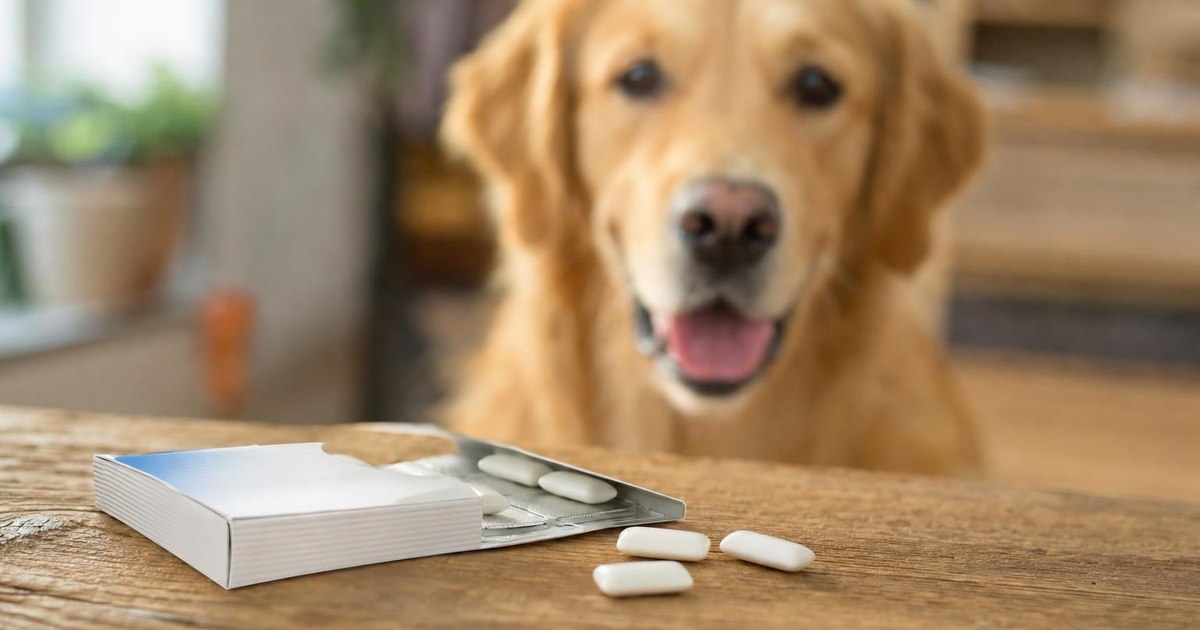
Is Xylitol Safe? Sugar Alcohol, Dental Health, and Dogs
What is xylitol?
Xylitol is a sugar alcohol, a class of carbohydrate that tastes sweet but behaves differently from sugar in the body. Its European food additive designation is E967. The name comes from xylose, a five-carbon sugar found in woody plant material, particularly in the fibrous parts of corn cobs and birch bark.
It occurs naturally in many plants. Strawberries, plums, and cauliflower all contain trace amounts. Birch bark has enough that early commercial production relied on it. Today, most xylitol is manufactured from corn cobs, which are abundant and cheap: corn processing produces large quantities of corn cob waste, which is rich in xylose. The xylose is extracted, then hydrogenated under pressure to produce xylitol. Some specialty brands still use birch bark and market the distinction prominently. Chemically, there is no difference between the two: the xylitol molecule is the same regardless of source.
Xylitol looks and tastes much like table sugar. It is about 1:1 in sweetness, which makes it easy to substitute in recipes. It provides roughly 2.4 calories per gram, compared to 4 calories per gram for sucrose. This caloric reduction, combined with a glycemic index of 7 (vs. 65 for table sugar), is what drew food manufacturers to it as a sweetener for diabetic and "sugar-free" products in the 1960s and 1970s.
Is xylitol safe? What regulators say
FDA
The FDA classifies xylitol as Generally Recognized As Safe (GRAS) under 21 CFR 184.1635. This is one of the more permissive regulatory designations, reflecting the FDA's view that xylitol has a long history of safe use and does not require a specific pre-market approval review. There is no established acceptable daily intake (ADI) upper limit: the FDA has not found it necessary to cap consumption for healthy adults. Xylitol is approved for use in a wide range of food categories.
Health Canada
Health Canada permits xylitol as a food additive under the Food and Drug Regulations. It is approved for use in multiple food categories including confections, chewing gum, and table-top sweeteners. No consumer advisory has been issued.
EFSA and EU
The European Food Safety Authority granted xylitol an ADI of "not specified" in 1986, the highest safety classification EFSA assigns, indicating that no intake ceiling is needed for healthy adults. This was reaffirmed in subsequent reviews. Xylitol carries the designation E967 and is permitted across EU member states in a range of food applications.
WHO/JECFA
The Joint FAO/WHO Expert Committee on Food Additives also assigned xylitol an ADI of "not specified," consistent with the EFSA position. This puts xylitol in the same safety tier as common food components that have no meaningful risk at realistic dietary levels.
The dental health story
Xylitol's anti-cavity effect is one of the better-supported positive health claims associated with any food additive.
The foundational research was done in Finland. Starting in the early 1970s, researchers led by Kauko Mäkinen and Arje Scheinin at the University of Turku ran a series of clinical trials that became known as the Turku Sugar Studies. The central finding: participants who replaced dietary sugars with xylitol showed dramatically lower rates of new cavities compared to those eating sucrose. The two-year results, published in Acta Odontologica Scandinavica in 1975, showed an 85% reduction in cavities in the xylitol group.
The mechanism explains why. The bacteria primarily responsible for tooth decay (Streptococcus mutans) cannot ferment xylitol. When xylitol is present, S. mutans cells take it up via their normal sugar transport system, but the metabolic process stalls. The bacteria produce no acid from xylitol (acid is what erodes tooth enamel), and they cannot grow effectively. With sustained xylitol exposure, S. mutans populations in the mouth decline over weeks and months.
More recent evidence reinforces this. A 2015 Cochrane systematic review on xylitol for preventing dental caries found that fluoride toothpaste containing xylitol reduced cavities in primary teeth more than fluoride toothpaste alone. The review noted that the evidence is stronger for caries prevention in children than in adults, and that the benefit is dose-dependent, typically observed at 6 to 10 grams of xylitol per day, distributed across multiple exposures rather than taken all at once.
This is why xylitol is in toothpaste, mouthwash, and specifically formulated dental gum. The dental benefit is not from simply replacing sugar: it is from the active interference with S. mutans metabolism.
Digestive tolerance: where the limits are
Xylitol is poorly absorbed in the small intestine. The portion that is not absorbed continues into the large intestine, where it draws water osmotically and is fermented by gut bacteria. Above roughly 50 grams per day, this reliably causes diarrhea, bloating, and gas in most people. The effect is dose-dependent and self-limiting: it resolves when intake drops.
The threshold sounds high, but it is not unreachable. Heavy consumers of sugar-free gum, mints, and protein bars that all contain xylitol can accumulate meaningful amounts across a day. A pack of sugar-free gum (12-14 pieces) might contain 8-10 grams. A single serving of some sugar-free candies can contain 5-6 grams. Stacking these throughout the day can approach the symptomatic threshold for some people, though hitting 50 grams requires deliberate or heavy consumption.
At the doses found in a piece or two of gum, GI effects are not a practical concern for most people. For people who are sensitive, lower doses can trigger symptoms; individual tolerance varies.
Unlike some non-nutritive sweeteners, xylitol has not been associated with gut microbiome disruption in peer-reviewed research. Its interaction with gut bacteria is primarily fermentation, not the kind of compositional shift seen in some sweetener studies.
Xylitol is toxic to dogs: a full warning
This section is not a brief caveat. It is the most important safety issue associated with xylitol, and it has caused real deaths.
Dogs metabolize xylitol very differently from humans. When a dog ingests xylitol, the pancreas treats it as a signal to release a large amount of insulin, far more than xylitol actually triggers in human physiology. The resulting insulin surge drops blood glucose rapidly, causing hypoglycemia. Symptoms appear within 30 to 60 minutes and include weakness, lethargy, vomiting, loss of coordination, and seizures. At higher doses, xylitol also causes acute hepatic necrosis (liver cell death), which can progress to liver failure within 24-72 hours.
The toxic doses are low relative to the amounts found in consumer products:
- Hypoglycemia threshold: approximately 0.1 grams of xylitol per kilogram of body weight
- Liver failure threshold: approximately 0.5 g/kg
A 10-pound (4.5 kg) dog would reach the hypoglycemia threshold with approximately 0.45 grams of xylitol, the amount in roughly one third to one half of a single piece of sugar-free gum, depending on the brand. A 20-pound dog could be critically harmed by 2-3 pieces.
The ASPCA Animal Poison Control Center lists xylitol as one of the most dangerous household toxins for pets. The American Veterinary Medical Association (AVMA) issues explicit warnings about xylitol, particularly as it has expanded beyond gum into peanut butter, vitamins, baked goods, and other products where people would not expect a pet toxin to be present.
If a dog ingests any amount of a xylitol-containing product, do not wait for symptoms. Contact a veterinarian immediately or call the ASPCA Animal Poison Control Center at 888-426-4435.
Cats and other non-human animals: research on xylitol toxicity is most developed for dogs. Some evidence suggests xylitol may have similar metabolic effects in other species, but the dog data is the most clinically documented.
Birch xylitol vs corn xylitol: does the source matter?
Short answer: no, for safety purposes.
Birch bark has historically been the prestige source. Some brands market birch-sourced xylitol at a premium, implying it is more natural or cleaner than corn-derived xylitol. The manufacturing process differs, but the end product (the xylitol molecule, C5H12O5) is chemically identical regardless of whether it started as birch xylose or corn cob xylose.
The shift toward corn-derived xylitol is primarily economic. Corn processing generates large amounts of corn cob waste that would otherwise have limited uses; extracting xylose from it is efficient. Birch bark requires more targeted sourcing and tends to be a Scandinavian and Eastern European specialty.
If you prefer birch-derived xylitol for personal reasons, that is a reasonable choice. But from a safety, efficacy, or purity standpoint, the source does not change the ingredient's properties.
A note on the 2024 erythritol-cardiovascular study
In February 2024, a Cleveland Clinic research team led by Stanley Hazen published findings in Nature Medicine linking elevated blood erythritol levels with cardiovascular risk (platelet aggregation, clotting). This study received widespread media coverage and was sometimes misreported as being about xylitol or sugar alcohols generally.
Erythritol and xylitol are different molecules. The Hazen 2024 study was specifically about erythritol (E968), not xylitol (E967). The cardiovascular findings do not apply to xylitol. The two are sometimes confused because both are sugar alcohols found in similar products. If you saw a headline about "sugar alcohol heart risk" in 2024, that was erythritol, not xylitol.
Where you will find xylitol
Xylitol is most common in:
- Sugar-free chewing gum (often the primary sweetener)
- Dental products: toothpaste, mouthwash, dental chews
- Sugar-free mints and hard candies
- Some protein bars and meal-replacement products
- "Diabetic" baked goods and cookies
- Sugar-free peanut butter (not all brands; check the label)
- Nasal sprays (a small category, not a food use)
- Vitamins and gummy supplements with sugar-free formulations
The dog toxicity concern makes label-checking important not just for your own consumption but for anything that might be accessible to a pet. Peanut butter is the highest-risk category because dogs are commonly fed peanut butter as a treat and owners do not always expect a sweetener in it.
Products containing xylitol (E967): verified examples
The following products are verified in the Open Food Facts database as containing E967:
| Barcode | Product | Brand | Category |
|---|---|---|---|
| 7622201118570 | Trident Spearmint Flavor | Trident | Chewing gum |
| 80935490 | Pure Fresh Chewing Gum | Mentos | Chewing gum |
| 3760087361223 | Xylitol (bulk sweetener) | Ecoidees | Sugar substitute |
| 5390691017919 | Vitamin and Protein Bar | Fulfil | Protein bar |
| 7340001805116 | Peanut Butter Bar | Barebells | Confection/bar |
Barcodes verified in Open Food Facts as of May 2026 with en:e967 in additives_tags.
Frequently asked questions
Is xylitol safe?
For humans, yes at typical dietary doses. The FDA, Health Canada, EFSA, and WHO/JECFA have all classified xylitol as safe with no required daily intake cap for healthy adults. Digestive side effects (diarrhea, bloating) occur at higher doses, typically above 50 grams per day. Xylitol is not safe for dogs under any dose.
Is xylitol toxic to dogs?
Yes. Xylitol causes severe insulin release in dogs, leading to hypoglycemia and potentially liver failure. Even 1-3 pieces of xylitol gum can be life-threatening for a small dog. If a dog consumes xylitol, contact a vet immediately. The ASPCA Animal Poison Control Center number is 888-426-4435.
What are xylitol side effects?
In humans: digestive upset (diarrhea, gas, bloating) at doses above roughly 50 grams per day. These are dose-dependent and resolve when intake drops. No serious adverse effects have been documented in healthy adults at typical dietary intake. In dogs: hypoglycemia, liver failure, potentially death.
Does xylitol prevent cavities?
Yes. Multiple clinical trials, including the Turku Sugar Studies starting in the 1970s, established that xylitol inhibits the cavity-causing bacteria Streptococcus mutans. A 2015 Cochrane review confirmed reduced caries with xylitol toothpaste. The benefit requires roughly 6-10 grams per day in multiple doses.
Is xylitol natural?
It occurs naturally in fruits and vegetables, but commercial xylitol is manufactured by extracting xylose from plant material (usually corn cobs today, birch bark historically) and hydrogenating it. The end molecule is the same regardless of source. "Natural" depends on your definition; the manufacturing process is industrial.
Is xylitol keto?
Generally yes. Its glycemic index is 7, it does not significantly raise insulin in humans, and most keto frameworks treat it as an acceptable sweetener. Digestive sensitivity to sugar alcohols varies by individual.
Is xylitol better than sugar?
For dental health: yes. For blood sugar impact: yes. For calories: somewhat (2.4 kcal/g vs 4 kcal/g for sucrose). For cost: no. For pets in the household: it introduces a real hazard that sugar does not.
Sources
- FDA. 21 CFR 184.1635: Xylitol. Code of Federal Regulations. U.S. Food and Drug Administration.
- Health Canada. Food Additive Listings: Xylitol. Government of Canada.
- EFSA Panel on Food Additives and Nutrient Sources. Opinion on xylitol as a food additive. EFSA Journal. 1986; ADI "not specified."
- WHO/JECFA. Summary of Evaluations Performed by the Joint FAO/WHO Expert Committee on Food Additives. Xylitol.
- Scheinin A, Makinen KK, Ylitalo K. Turku Sugar Studies. Acta Odontologica Scandinavica. 1975;33(Suppl. 70):1-349.
- Riley P, Moore D, Ahmed F, Sharif MO, Worthington HV. Xylitol-containing products for preventing dental caries in children and adults. Cochrane Database of Systematic Reviews. 2015;(3):CD010743.
- Makinen KK. Sugar Alcohols, Caries Incidence, and Remineralization of Caries Lesions. International Journal of Dentistry. 2010;2010:981072.
- Livesey G. Health potential of polyols as sugar replacers, with emphasis on low glycaemic properties. Nutrition Research Reviews. 2003;16(2):163-191.
- ASPCA Animal Poison Control Center. Xylitol Toxicity in Animals. ASPCA Professional.
- Dunayer EK, Gwaltney-Brant SM. Acute hepatic failure and coagulopathy associated with xylitol ingestion in eight dogs. Journal of the American Veterinary Medical Association. 2006;229(7):1113-1117.
- Khanna C, Boermans HJ, Wilcock B. Fatal hypoglycemia in a dog secondary to xylitol ingestion. Veterinary and Human Toxicology. 1997;39(1):42-43.
- Hazen SL, et al. Erythritol is a pentose-phosphate pathway metabolite and associated with cardiovascular disease risk. Nature Medicine. 2024;30(2):381-394. [Note: this study covers erythritol, not xylitol.]
- Grembecka M. Sugar Alcohols: Their Role in the Modern World of Sweeteners. European Food Research and Technology. 2015;241(1):1-14.
- Tapola NS, Lindstedt KA, Lampi AM, Usagetyrant M, Arrendondo PM. Glycaemic responses and insulin secretion after ingestion of xylitol and glucose. Journal of Human Nutrition and Dietetics. 2005.
- European Parliament and of the Council. Regulation (EC) No 1333/2008 on food additives. Annex II, Entry E967.
Frequently asked questions
Common questions about this ingredient.
Is xylitol safe for humans?
Yes, for humans at typical dietary doses. Xylitol is classified as Generally Recognized As Safe (GRAS) by the FDA under 21 CFR 184.1635, with no established upper daily limit for adults. The FDA, Health Canada, EFSA, and WHO/JECFA have all reviewed the evidence and found xylitol safe for human consumption. The main practical concern is digestive: doses above roughly 50 grams per day cause osmotic diarrhea and bloating in most people because xylitol is poorly absorbed in the small intestine. A standard piece of sugar-free gum contains 0.7 to 1.5 grams of xylitol, so the GI threshold is well above what most people consume.
Is xylitol toxic to dogs?
Yes, xylitol is severely toxic to dogs and is one of the most dangerous common food ingredients for pets. When dogs ingest xylitol, their pancreas releases a rapid surge of insulin in response, causing life-threatening hypoglycemia (dangerously low blood sugar). At higher doses, xylitol can also cause acute liver failure in dogs. The toxic dose is approximately 0.1 grams per kilogram of body weight for hypoglycemia and 0.5 g/kg for liver failure. A 10-pound dog can be critically harmed by as few as 2-3 pieces of xylitol-containing gum. The ASPCA Animal Poison Control Center and the American Veterinary Medical Association (AVMA) both list xylitol as a priority toxin. If a dog ingests xylitol, contact a veterinarian or the ASPCA Animal Poison Control Center (888-426-4435) immediately.
Does xylitol prevent cavities?
Yes, this is one of the more solid positive findings in nutrition research. The mechanism is direct: the bacteria that cause tooth decay (primarily Streptococcus mutans) cannot ferment xylitol the way they ferment sugars. They take up xylitol, fail to metabolize it, and produce no acid. With repeated exposure, the S. mutans population in the mouth is reduced over time. A 2015 Cochrane systematic review found fluoride toothpaste with xylitol reduced cavities more than fluoride toothpaste alone. Multiple Finnish clinical trials from the 1970s onward (the foundational work led by Kauko Mäkinen and Arje Scheinin) consistently showed meaningful cavity reduction with daily xylitol gum use of 6 to 10 grams per day.
What are xylitol side effects?
Digestive symptoms are the primary dose-dependent side effect in humans. Above approximately 50 grams per day, xylitol acts as an osmotic laxative, drawing water into the colon and causing diarrhea, gas, and bloating. At lower doses, some people experience mild digestive discomfort; others notice nothing. These effects are self-limiting and resolve when consumption drops. Unlike some artificial sweeteners, xylitol has not shown gut microbiome disruption in the research to date. There are no known serious adverse effects in healthy adults at typical dietary intake levels.
Is xylitol better than sugar?
For dental health and blood sugar control, yes. Xylitol has a glycemic index of 7 compared to 65 for table sugar, making it substantially lower-impact on blood glucose. It provides about 2.4 calories per gram vs. 4 calories per gram for sucrose. It does not feed the oral bacteria that cause cavities. For people managing diabetes or reducing sugar intake, xylitol is a functional substitute. The trade-off is price (xylitol costs several times more than sugar) and digestive tolerance at higher doses.
Is xylitol natural?
Xylitol occurs naturally in many fruits and vegetables: strawberries, plums, cauliflower, and the fibrous parts of corn cobs all contain small amounts. Birch bark is a particularly rich source. However, commercial xylitol is an industrial product: xylose (a plant sugar) is extracted from plant material and hydrogenated under pressure to produce xylitol. Most xylitol sold today is derived from corn cobs, not birch bark, because corn is cheaper and more available. Some brands market 'birch xylitol' specifically. From a safety standpoint, there is no meaningful difference between corn-derived and birch-derived xylitol: the end molecule is chemically identical.
Is xylitol keto-friendly?
Generally yes, though with caveats. Xylitol has a glycemic index of 7 and a low insulin response, so it fits within most ketogenic diet frameworks. Its calorie count (2.4 kcal/g) means it contributes to total energy intake, which matters in strict approaches. Some people on keto report digestive issues with sugar alcohols, including xylitol, at higher doses. Net carb counting can be tricky: technically xylitol has 4g of carbohydrates per gram, but most keto calculators subtract sugar alcohols entirely or partially from net carb totals. Check your specific approach, since practices vary.
The app reads ingredient labels with your camera and flags this and hundreds of other additives in seconds.
