
What is xanthan gum?
Xanthan gum is a polysaccharide (a long-chain carbohydrate molecule) produced by the bacterium Xanthomonas campestris through a process of fermentation. It is not derived from a plant or mineral. It is a microbial product.
The bacterium naturally secretes xanthan gum as a protective coating, a common strategy among bacteria for retaining moisture and adhering to surfaces. Industrial production harnesses this behavior at scale: the bacteria are grown in fermentation tanks with a sugar source as their food, and the gum they secrete is harvested, purified, dried, and milled into a fine white powder.
What makes xanthan gum useful in food is its rheological behavior, specifically the way it creates viscosity in water even at very low concentrations (typically 0.1 to 0.5 percent by weight), and the way that viscosity changes predictably under shear stress. Stir or pump a xanthan-gum solution and it flows easily. Leave it alone and it holds its structure. This property, called pseudoplasticity, is why xanthan gum works in products that need to flow out of a bottle but not immediately run off food.
It carries the European designation E415. In the US it is listed by name on ingredient labels.
How xanthan gum is produced
The production process starts with a sugar source: glucose or sucrose derived from corn, wheat, soy, or dairy, depending on the manufacturer and what is cheapest in a given market. Xanthomonas campestris is inoculated into the substrate and allowed to ferment, typically for several days. As the bacteria consume the sugar, they secrete xanthan gum into the surrounding liquid.
Once fermentation is complete, the gum is precipitated from the broth by adding isopropyl alcohol, which makes the gum insoluble. The precipitate is filtered, dried, and ground into the powder that enters the food supply.
The substrate used for fermentation is not disclosed on the finished-product label. A product labeled simply "xanthan gum" could have been made on a corn substrate, a wheat substrate, or another source entirely. This is relevant for people managing corn, soy, or wheat allergies, and to a lesser degree for people with celiac disease.
Is xanthan gum safe? What regulators say
FDA
The FDA classifies xanthan gum as generally recognized as safe (GRAS) under 21 CFR 172.695. It is permitted as a stabilizer and thickener with no specified upper use level. The FDA has conducted no formal rulemaking restricting adult or general consumer use of xanthan gum.
The significant FDA action in this space was a 2011 safety alert, a specific and narrow event discussed in detail below.
Health Canada
Health Canada permits xanthan gum under Division 16 of the Food and Drug Regulations as a food additive. It is authorized across food categories with no established maximum level. Health Canada has issued no consumer advisories regarding xanthan gum in general food contexts.
EFSA
The European Food Safety Authority reassessed xanthan gum in 2017 (EFSA ANS Panel, EFSA Journal 2017;15(3):4909, DOI: 10.2903/j.efsa.2017.4909). The panel's conclusion was that there were no safety concerns at current permitted uses and estimated dietary exposures. EFSA did not establish a numerical ADI.
As with citric acid, the absence of a numerical ADI is meaningful. Most additives receive an ADI as a precautionary upper limit. EFSA evaluated xanthan gum and found the evidence did not warrant one.
WHO/JECFA
The Joint FAO/WHO Expert Committee on Food Additives assigned xanthan gum an ADI of "not specified." In JECFA's framework, "not specified" is reserved for substances with very low toxicity where the evidence indicates that total dietary intake at use levels needed to achieve the technological effect does not pose a health hazard. No upper intake limit has been set.
EU listing
Xanthan gum is authorized as E415 in the EU under Annex II and Annex III of Regulation (EC) No 1333/2008. It is permitted across a wide range of food categories, in most cases at "quantum satis," meaning at the amount needed to achieve the intended purpose, with no fixed maximum concentration.
The substrate question: corn, soy, wheat, and dairy
The fermentation substrate is the main practical concern for people with food allergies and for people managing celiac disease.
Corn. In North America, corn-derived glucose is a common substrate. People with corn allergies should be aware that trace corn-derived material may be present in the finished gum, though the fermentation and purification process removes most protein. There is no regulatory requirement to disclose the substrate.
Wheat. Wheat starch can be used as a substrate. When this is the case, residual gluten is a theoretical concern. In practice, independent testing has consistently found that commercial xanthan gum falls below the 20 ppm threshold that defines gluten-free in the US, Canada, and the EU, even when produced on wheat. The Gluten Intolerance Group (GIG) has confirmed that commercial xanthan gum meets gluten-free standards under its certification program.
Soy. Soy is another possible substrate. The same logic applies: fermentation and purification reduce protein content substantially, but trace residues may remain.
Dairy. Some production processes use dairy-derived substrates. This is less common but relevant for people with dairy allergies.
If you are managing a specific food allergy and need to know the substrate, the only reliable path is to contact the manufacturer directly for lot-specific information. This is rarely practical for general grocery shopping, but it matters for clinical allergy management.
The SimplyThick warning: what happened in 2011
This is the most significant safety event in the regulatory history of xanthan gum, and it is important to understand it precisely, because it is both a real safety concern and a highly specific one.
In May 2011, the FDA issued a safety alert warning against the use of SimplyThick, a xanthan-gum-based gel thickener, in premature infants and newborns. SimplyThick had been marketed to help NICU infants with swallowing difficulties, mixed into breast milk or formula to increase viscosity.
Following reports from neonatologists, the FDA determined that SimplyThick use was associated with cases of necrotizing enterocolitis (NEC) in NICU infants, a severe intestinal condition in which bowel tissue dies, with a mortality rate of 20 to 30 percent in severe cases. A correspondence published in the New England Journal of Medicine in 2012 (Beal et al., NEJM 2012;367:2493-2494, DOI: 10.1056/NEJMc1211859) documented 22 cases of NEC in premature infants who had received SimplyThick, including multiple deaths.
The manufacturer recalled the product for use in premature infants and later reformulated. The FDA warning has remained in place for this population.
Why were NICU infants specifically at risk? Several mechanisms have been proposed. Premature infants have an immature gut microbiome and intestinal barrier. The bacterial fermentation behavior of xanthan gum in the infant gut (which may produce gas, short-chain fatty acids, and inflammatory byproducts in quantities that an immature intestinal lining cannot handle) appears to have contributed to NEC development. The same fermentation behavior is not a problem in the adult or child gut, where the intestinal barrier is mature and the microbiome is established.
This is a NICU-specific clinical risk, not an adult consumer risk. Every major food safety authority that has reviewed xanthan gum for adult use has concluded it is safe. But if you work with premature infants or have a child in a NICU setting, the SimplyThick warning is a real and documented concern.
GI effects in adults
At the concentrations used in food (typically under 1 gram per serving), xanthan gum does not produce measurable GI effects in most people. It behaves as a soluble fiber, fermenting in the large intestine. In small amounts this is unremarkable.
Research studies using therapeutic or experimental doses have found a laxative effect at higher consumption levels. A controlled study published in Human Nutrition: Clinical Nutrition (Eastwood et al., 1987) used 15 grams per day and observed increased stool output and softening. These doses are far above what typical food consumption delivers.
Some people report bloating, gas, or loose stools after eating multiple xanthan-gum-heavy products in one meal or day. This is consistent with fermentable fiber behavior and is not unique to xanthan gum. Guar gum and psyllium husk cause similar effects at higher doses. People following a gluten-free diet often consume significantly more xanthan gum than the general population, since it appears in nearly every gluten-free packaged product.
What recent microbiome research shows
Research published between 2022 and 2024 has begun examining how xanthan gum interacts with the gut microbiome more specifically.
A 2022 paper in Nature (Baumann et al., Nature 2023;617:711-720, DOI: 10.1038/s41586-023-05907-7) identified specific gut bacteria that can degrade xanthan gum as a carbon source. The study found that the human gut microbiome in people who regularly consume xanthan gum becomes enriched in species capable of breaking it down. The paper was widely covered, and some reporting framed this as alarming. The study itself was more nuanced: it documented a microbial adaptation to a dietary component, which is normal microbiome behavior.
The honest summary of the 2022-2024 literature: xanthan gum alters gut microbial composition in ways that are measurable and under active study. The evidence does not yet support saying this is harmful. It is far less studied than the microbiome effects of carrageenan (which has a more concerning body of evidence at the cell and animal model level) or emulsifiers like polysorbate 80.
This is an evolving research area. The current regulatory consensus (that xanthan gum is safe at food-use levels) reflects the evidence as of the most recent regulatory reviews. It does not mean the question is permanently closed.
Why xanthan gum is in nearly every gluten-free product
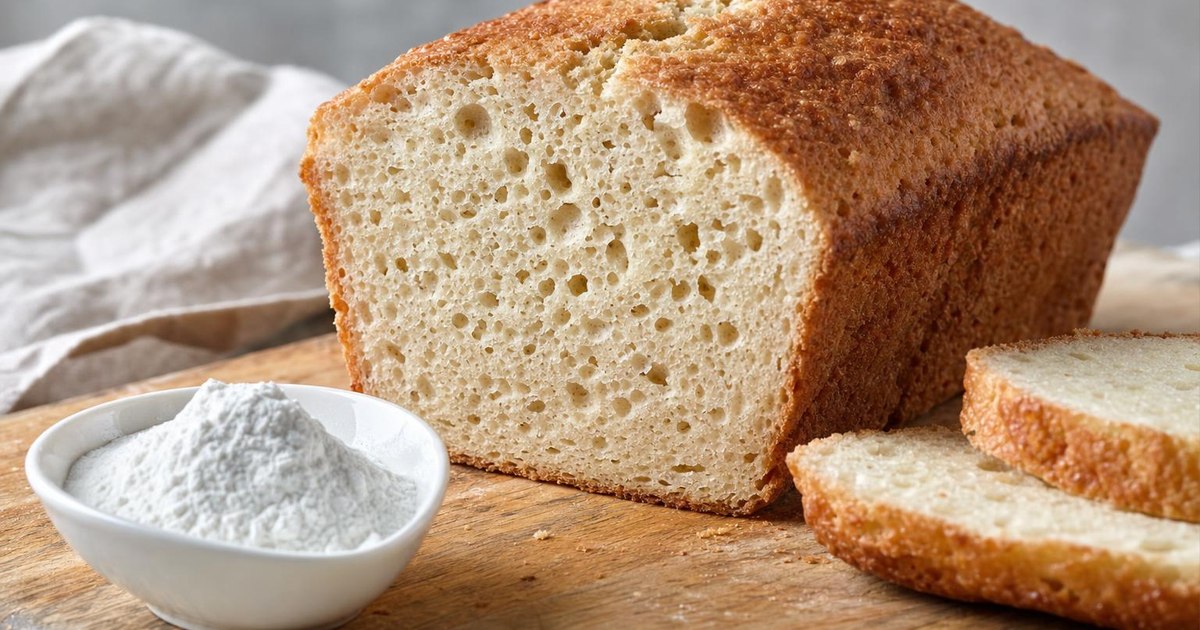
Gluten does several structural jobs in baked goods: it forms an elastic network that traps gas from yeast or baking powder, gives dough its stretch and spring, and helps the final product hold its shape and crumb structure after baking. Without gluten, most grain-based products collapse, crumble, or turn into dense bricks.
Xanthan gum is the most widely used substitute for these mechanical functions in gluten-free baking. At concentrations of 0.1 to 0.5 percent of total flour weight, it creates enough viscosity and elasticity to partially replicate what gluten does. It keeps gas bubbles from escaping too quickly during baking, provides enough structure to hold the crumb together after cooling, and improves moisture retention.
No substitute does this as efficiently or reliably at such a low use level. Guar gum is the closest alternative, but it performs less well at higher baking temperatures and contributes more of a slightly slimy texture in some applications. Psyllium husk works well in some bread formulas but adds color and density. Chia and flax gels are functional but add their own flavor profiles.
The result: xanthan gum appears in gluten-free bread, pasta, crackers, cookies, cakes, pizza crust, tortillas, and almost every other grain-based gluten-free product on the market. People following a gluten-free diet who eat a lot of packaged food are consuming xanthan gum daily in multiple products.
Where you will find xanthan gum
Beyond gluten-free products, xanthan gum appears across a wide range of food categories:
- Salad dressings (keeps oil and vinegar from separating)
- Hot sauces and chili sauces (provides the viscous, cling-to-food consistency)
- Ice cream and frozen desserts (stabilizes and prevents ice crystal growth)
- Dairy alternatives: oat milk, almond milk, coconut milk beverages (provides creaminess and prevents separation)
- Protein powders and meal replacement drinks (prevents settling and improves texture when mixed)
- Sauces, gravies, and soups
- Low-fat dairy products where fat reduction reduces natural creaminess
- Cosmetics and pharmaceutical gels (outside food, the same thickening properties apply)
On ingredient labels it almost always appears as "xanthan gum." It is not hidden under other names in standard food labeling. The EU designation E415 appears on European products.
Verified products containing E415
Five products verified against OpenFoodFacts (May 2026), all confirmed to contain E415:
| Product | Brand | OFF Barcode | Nova Group | Nutri-Score |
|---|---|---|---|---|
| Sriracha Hot Chili Sauce | Huy Fong Foods | 0024463061095 | 4 | A |
| The Original Ranch Dressing | Hidden Valley | 0071100005516 | 4 | C |
| Organic Protein Powder | Orgain | 0851770007566 | 4 | N/A |
| English Muffins Light Multi-Grain | Thomas' | 0048121276201 | 4 | A |
| Classic Ranch Yogurt Dressing | Bolthouse Farms | 0071464022853 | 4 | D |
The Nova Group 4 rating reflects the overall product formulation in each case, not xanthan gum specifically. Xanthan gum's role here is functional (thickening, stabilization), present in very small amounts relative to total product weight.
FAQ
Is xanthan gum safe to eat?
For adults and children, yes, based on the regulatory consensus. FDA, Health Canada, EFSA, and WHO/JECFA have all reviewed it and found no safety concerns at food-use levels, with no numerical ADI required. The one documented exception is premature and newborn infants in clinical settings, where a 2011 FDA recall linked a xanthan-gum thickener to a serious bowel condition. That risk is specific to NICU contexts and does not apply to adults.
What is xanthan gum made from?
It is produced by the bacterium Xanthomonas campestris during fermentation on a sugar substrate. The sugar can come from corn, wheat, soy, or dairy, depending on the manufacturer. The bacteria secrete the gum, which is then precipitated, dried, and milled into white powder. Most people assume it is a plant extract. It is a bacterial product.
Is xanthan gum gluten-free?
Commercial xanthan gum is generally considered gluten-free even when produced on a wheat substrate. Independent testing consistently shows residual gluten levels well below the 20 ppm threshold. The Gluten Intolerance Group has confirmed this through its certification program. People with celiac disease who are highly reactive should look for certified gluten-free labeling at the ingredient level, since substrate sourcing is not disclosed on labels.
What are the side effects of xanthan gum?
At typical food-use amounts (under 1 gram per serving), no documented side effects for most people. At high doses (15 grams per day in research studies), a laxative effect has been observed. Some individuals report bloating or gas, consistent with fermentable fiber behavior. People with allergies to the fermentation substrate (corn, soy, wheat) may react to trace residues. The NICU infant concern is a separate clinical issue, not applicable to adults.
What can I substitute for xanthan gum in baking?
Guar gum is the closest equivalent: both are hydrocolloid thickeners used at similar ratios. Psyllium husk is effective in bread formulas, especially when mixed with water first. Ground flaxseed and chia seeds form gels when hydrated and work in denser baked goods. For guar gum, the substitution ratio is roughly 3/4 teaspoon per cup of gluten-free flour in place of 1 teaspoon of xanthan gum.
Does xanthan gum come from corn?
Corn-derived glucose is a common fermentation substrate, particularly in North America, but xanthan gum is the bacterial polysaccharide itself, not corn. The substrate is not disclosed on finished-product labels. For people with corn allergies, this means it is difficult to rule out trace corn-derived material without contacting the manufacturer directly.
Is xanthan gum the same as guar gum?
No. Both are polysaccharide thickeners that substitute for gluten in similar applications, but they come from different sources. Guar gum is extracted from guar bean endosperm. Xanthan gum is produced by bacterial fermentation. They have slightly different performance profiles: guar gum handles cold better, xanthan gum performs more consistently at high temperatures and across a wider pH range. Some formulations use both together for a synergistic thickening effect.
Sources
- FDA. 21 CFR 172.695: Xanthan gum. Code of Federal Regulations. Available at: https://www.ecfr.gov/current/title-21/chapter-I/subchapter-B/part-172/subpart-F/section-172.695
- EFSA ANS Panel. Re-evaluation of xanthan gum (E 415) as a food additive. EFSA Journal. 2017;15(3):4909. DOI: 10.2903/j.efsa.2017.4909
- WHO/JECFA. Xanthan gum. Compendium of Food Additive Specifications, Monograph 6. FAO/WHO; 2007.
- FDA. FDA Safety Alert: SimplyThick. May 2011 (updated 2012). Available at: https://www.fda.gov/food/cfsan-constituent-updates/fda-issues-safety-alert-simply-thick
- Beal J, Silverman B, Bellant J, Young TE, Klontz K. Late onset necrotizing enterocolitis in infants following use of a xanthan gum-containing thickening agent. The New England Journal of Medicine. 2012;367(26):2493-2494. DOI: 10.1056/NEJMc1211859
- Eastwood MA, Brydon WG, Anderson DMW. The effect of dietary xanthan gum on bowel function and lipid composition in human volunteers. Human Nutrition: Clinical Nutrition. 1987;41(5):379-384.
- Baumann A, Ladefoged-Andersen L, et al. Gut microbiota encode xanthan gum degradation. Nature. 2023;617:711-720. DOI: 10.1038/s41586-023-05907-7
- Gluten Intolerance Group (GIG). Xanthan Gum and Gluten-Free Certification. GFFS Program documentation. Available at: https://www.gluten.org/resources/
- Health Canada. Food and Drug Regulations, Division 16: Food Additives. Available at: https://laws-lois.justice.gc.ca/eng/regulations/C.R.C.,_c._870/
- European Commission. Regulation (EC) No 1333/2008 on food additives, Annex II. E415: Xanthan gum. Available at: https://eur-lex.europa.eu/legal-content/EN/TXT/?uri=CELEX:02008R1333-20231201
- Garcia-Ochoa F, Santos VE, Casas JA, Gomez E. Xanthan gum: production, recovery, and properties. Biotechnology Advances. 2000;18(7):549-579. DOI: 10.1016/S0734-9750(00)00050-1
- Sworn G. Xanthan gum. In: Phillips GO, Williams PA, eds. Handbook of Hydrocolloids. 2nd ed. Woodhead Publishing; 2009:186-203.
- US FDA. GRAS Notice No. GRN 000041. Xanthan gum as a food ingredient. 2000.
Frequently asked questions
Common questions about this ingredient.
Is xanthan gum safe to eat?
For adults and children, yes, according to every major food safety authority. The FDA has granted xanthan gum GRAS (generally recognized as safe) status. Health Canada permits it under Division 16 of the Food and Drug Regulations. EFSA completed a full reassessment in 2017 and found no safety concerns. WHO/JECFA assigned it an ADI of 'not specified,' the highest safety category the committee uses, meaning no upper intake limit was considered necessary. The one documented exception is premature and newborn infants: a 2011 FDA safety alert and product recall linked a xanthan-gum-based thickener called SimplyThick to cases of necrotizing enterocolitis (NEC) in NICU infants. That is a specific clinical context, not a general consumer risk.
What is xanthan gum made from?
Xanthan gum is produced by fermenting a sugar source (typically glucose or sucrose derived from corn, soy, wheat, or dairy) with a bacterium called Xanthomonas campestris. The bacteria secrete the gum as they metabolize the sugar. The resulting material is then dried and milled into the fine white powder that shows up in ingredient lists. The substrate used for fermentation (corn, soy, wheat) is the reason xanthan gum may be a concern for people with corn, soy, or wheat allergies: the substrate can vary by manufacturer and is not disclosed on the finished-product label.
Is xanthan gum gluten-free?
Commercial xanthan gum is generally considered gluten-free, even when produced on a wheat substrate. This is because the fermentation process breaks down the substrate, and purification removes protein residues including gluten proteins. Independent testing by organizations like the Gluten Intolerance Group has found that commercial xanthan gum typically falls well below the 20 ppm threshold that defines gluten-free in the US, Canada, and EU. That said, people with celiac disease who are highly sensitive should look for products where the xanthan gum is certified gluten-free at the ingredient level, since substrate sourcing is not disclosed on labels.
What are the side effects of xanthan gum?
At the amounts found in typical foods (usually under 1 gram per serving), xanthan gum causes no documented side effects for most people. Research studies using much larger doses (15 grams per day and above) have found a laxative effect, consistent with its behavior as a soluble fiber. Some people report bloating or digestive discomfort, particularly when consuming multiple xanthan-gum-containing products in one sitting. People with an allergy to the fermentation substrate (corn, soy, wheat, or dairy) may react to trace residues in the gum. The NICU infant risk is a separate clinical situation, not an adult concern.
What can I substitute for xanthan gum in baking?
The most common substitutes in gluten-free baking are guar gum, psyllium husk, flaxseed meal (ground and mixed with water to form a gel), and chia seeds (similarly gel-forming when hydrated). Guar gum is the closest functional equivalent: both are polysaccharide hydrocolloids that provide viscosity and structure in the absence of gluten. Guar gum is derived from guar beans (a legume), while xanthan gum is bacterial in origin. For binding: roughly 3/4 teaspoon of guar gum per cup of gluten-free flour replaces about 1 teaspoon of xanthan gum. Psyllium husk is used at higher ratios (about 2 teaspoons per cup of flour) and adds a slightly denser texture.
Does xanthan gum come from corn?
Not exactly. Xanthan gum itself is not corn: it is a polysaccharide produced by a bacterium. But corn-derived glucose is one of the most common fermentation substrates used by manufacturers, particularly in North America. So xanthan gum is often made using corn-derived sugars as the bacterial food source. This matters for people with corn allergies: while the finished gum is mostly Xanthomonas campestris polysaccharide rather than corn protein, trace corn-derived material may remain. Substrate sourcing varies by manufacturer and is not disclosed on finished-product labels, which makes it difficult to verify independently.
Is xanthan gum the same as guar gum?
No. Both are polysaccharide thickeners used in similar applications, but they come from different sources and have slightly different functional properties. Xanthan gum is made by bacterial fermentation. Guar gum is extracted from the endosperm of guar beans grown primarily in India and Pakistan. In most food and baking applications they are interchangeable at similar concentrations, though guar gum performs better in cold foods and xanthan gum holds up better at higher temperatures and across a wider pH range. Some products use both together, since they can have a synergistic thickening effect at lower combined concentrations than either alone.
The app reads ingredient labels with your camera and flags this and hundreds of other additives in seconds.
