
Is Stevia Safe? What the FDA, EFSA, and Health Canada Say
What is stevia?
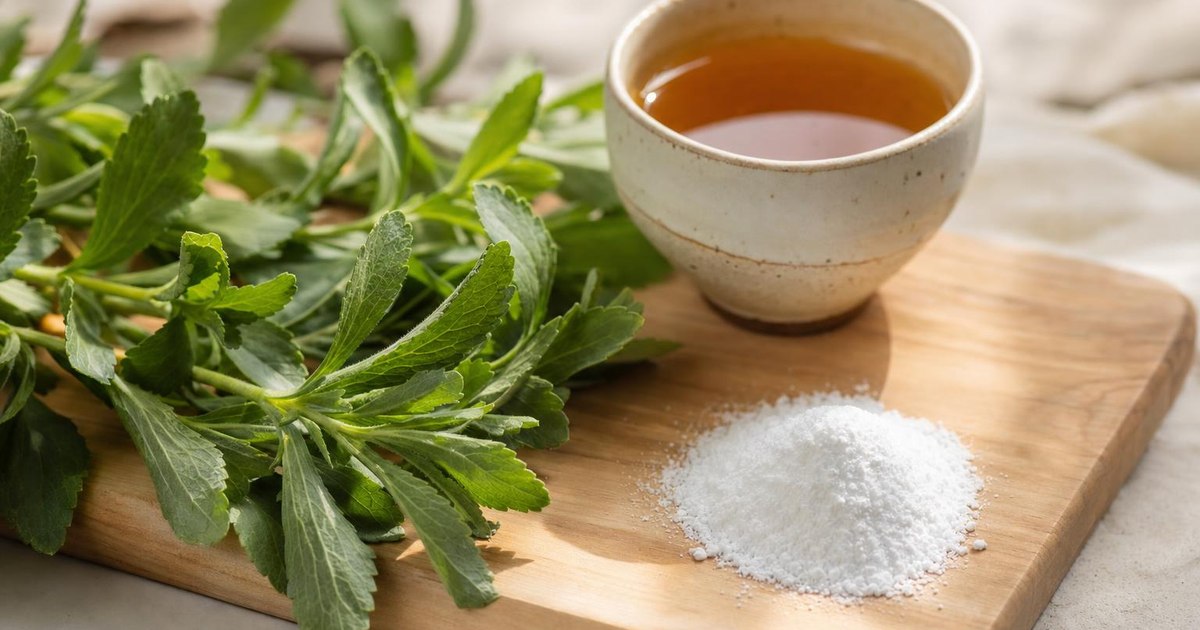
Stevia is a sweetener derived from the leaves of Stevia rebaudiana, a plant native to Paraguay and Brazil. The leaves contain a family of compounds called steviol glycosides, which bind to sweet taste receptors roughly 200 to 400 times more intensely than sucrose depending on the specific glycoside. That intensity is why a tiny amount of stevia extract can sweeten an entire beverage.
The plant itself has been used in Paraguay for centuries: people chewed the leaves and brewed them as a sweet tea long before stevia attracted commercial interest. Modern food production, however, does not use the whole leaf. It uses isolated, purified glycoside fractions extracted from dried leaves.
The major steviol glycosides in commercial use:
- Stevioside: the most abundant glycoside in the leaf (up to 10% by dry weight), the first one studied extensively, responsible for much of the aftertaste in early commercial stevia products
- Rebaudioside A (Reb-A): cleaner taste profile than stevioside, less bitter aftertaste, became the dominant commercial choice after regulatory approvals
- Rebaudioside D (Reb-D) and Rebaudioside M (Reb-M): newer, higher-purity fractions with the cleanest taste profiles, used in premium beverages; available in smaller quantities from the leaf so often produced via fermentation or enzymatic conversion
When you see "stevia leaf extract" or "steviol glycosides" on an ingredient label, you are looking at one or more of these purified fractions, not ground stevia leaves.
Is stevia safe? What regulators say
FDA
The FDA's position hinges on a critical distinction that most consumer coverage misses: whole-leaf stevia is not approved by the FDA as a food additive or GRAS sweetener. The FDA has issued import alerts for stevia-containing products that use the whole leaf or crude extracts, classifying them as unsafe food additives.
What is approved: high-purity rebaudioside A (Reb-A). In 2008, the FDA received a GRAS (Generally Recognized As Safe) notice for Reb-A from Cargill's PureVia and the Rebiana Coalition. The FDA issued a letter of no objection in December 2008, effectively greenlighting purified Reb-A as a GRAS sweetener. Subsequent GRAS notifications for other purified steviol glycoside fractions followed. As of 2026, the FDA has not challenged or reopened any of these determinations.
The practical implication: products labeled "made with stevia" or "stevia sweetened" in the US use purified glycoside extracts. The FDA label requirement is that the ingredient appear as "stevia leaf extract" or "steviol glycosides" (or the specific glycoside name like "rebaudioside A") in the ingredient list.
Health Canada
Health Canada approved steviol glycosides as a food additive in 2012, after a full safety review. They are listed under the Marketing Authorization for Steviol Glycosides, which permits their use as sweeteners and flavor modifiers in specified food categories. The Canadian maximum permitted levels in foods range by category and are expressed as steviol equivalents, aligned with the international ADI.
EFSA
The European Food Safety Authority conducted a full scientific opinion on steviol glycosides in 2010 (EFSA Journal 2010; 8(4):1537, DOI: 10.2903/j.efsa.2010.1537). EFSA established an Acceptable Daily Intake of 4 mg/kg body weight per day, expressed as steviol equivalents. For a 70 kg adult, that is 280 mg of steviol daily. A 2019 update reviewed new data that had emerged since 2010 and confirmed the 4 mg/kg ADI was still appropriate (EFSA Journal 2019; 17(1):e05551).
EFSA also evaluated exposure across European populations and found that for most adults, typical dietary intake of steviol glycosides from food stays within the ADI. Children with high consumption of stevia-sweetened beverages could approach the ADI more closely.
WHO/JECFA
The Joint FAO/WHO Expert Committee on Food Additives evaluated steviol glycosides in 2008 (68th meeting) and established the same ADI: 4 mg/kg body weight per day as steviol. This was the first formal international safety evaluation, and it preceded the FDA GRAS determinations by a matter of months. JECFA's evaluation formed the scientific backbone for Health Canada's 2012 approval and aligned with EFSA's subsequent assessment.
EU
In the EU, steviol glycosides carry the designation E960. They are authorized as sweeteners under Regulation (EC) No 1333/2008 on food additives, with specific maximum permitted levels set across food categories. These levels are expressed in mg steviol equivalents per kg of food. Not all food categories are permitted; E960 is targeted at categories like non-alcoholic flavored drinks, confectionery, table-top sweeteners, certain dairy products, and some processed foods.
The whole-leaf vs. purified distinction
This is the most important nuance on this page, and it gets glossed over constantly.
When people say "stevia is natural," they often mean the plant itself. When regulators say "stevia is approved," they mean highly purified glycoside extracts from that plant. These are not the same thing.
Whole-leaf stevia contains not just steviol glycosides but also diterpenes, flavonoids, volatile oils, and other compounds whose safety at commercial food-additive doses has not been established to the FDA's standard. The FDA has specifically stated that it does not consider whole-leaf stevia safe for use as a sweetener or food additive.
The distinction also explains why traditional Paraguayan use of stevia does not by itself establish safety for the purified extracts. The dose, the form, and the regularity of exposure are different. Scientific evaluation had to be done on the purified fractions at the concentrations actually used in food production.
For consumers: if you are buying stevia at a health food store and the label says "whole leaf stevia powder," that product occupies a different regulatory category than the stevia extract used to sweeten a Chobani yogurt. Neither the FDA nor Health Canada has approved whole-leaf stevia powder as a food additive.
What the research shows
Glycemic effects
The research here is consistently reassuring. Steviol glycosides are not digested or absorbed in the small intestine. They travel to the colon, where gut bacteria cleave the glycoside bonds, releasing steviol, which is then absorbed and excreted through the kidneys. The process produces no glucose and triggers no meaningful insulin response.
A 2003 trial published in Metabolism (Gregersen et al.) gave pure stevioside to people with type 2 diabetes and measured no effect on blood glucose. A 2012 study in Appetite (Anton et al.) tested stevia, sucrose, and aspartame as preloads before a standard meal and found that the stevia group consumed fewer total calories overall without increased hunger, a meaningful result given longstanding debate about whether non-caloric sweeteners lead to compensatory eating.
Gut microbiome
This is the most active area of current research and the least settled. A 2019 study in the journal Nutrients (Ruiz-Ojeda et al.) reviewed evidence on non-nutritive sweeteners and gut microbiota, and found that stevia had mixed effects: some studies showed shifts in bacterial populations (including reductions in Lactobacillus reuteri and increases in some firmicutes) at doses higher than typical human consumption, while other studies found no significant effects at realistic doses. A 2021 study in Molecules (Ávila-Herrera et al.) found microbiome changes in rats given stevia at high doses, but noted the doses exceeded what human dietary exposure would produce.
The current state of the science: the gut microbiome effects of stevia at typical dietary levels remain plausible but not established. No human clinical trial has demonstrated clinically meaningful gut dysbiosis from stevia at normal intakes. The research is worth watching but is not a basis for current safety concern.
Fertility concerns
Old ethnobotanical literature documented Paraguayan women using stevia plant as a contraceptive. This has generated persistent questions online. JECFA's 2008 evaluation reviewed the reproductive toxicology studies directly and concluded there was no evidence of adverse effects on fertility or reproduction at doses relevant to food additive use. Subsequent animal studies at high doses have not changed this assessment. The folk use involved quantities and preparations that do not correspond to stevia extract at food-grade concentrations.
Where you will find stevia in packaged food
Stevia-containing products cluster in a few categories:
- Protein shakes and meal replacements: stevia's intensity means small amounts can sweeten a high-protein formula without adding sugar load
- Greek yogurts: particularly zero-added-sugar lines (Oikos Triple Zero, Chobani Zero Sugar)
- Zero-calorie or low-sugar beverages: Bai antioxidant drinks, Zevia, Bubly sparkling water flavors
- Protein bars: Quest, RX Bar alternatives, many keto-targeted bars
- Table-top sweeteners: Truvia, Splenda Naturals Stevia, SweetLeaf packets
One thing to watch on labels: the word "stevia" can appear on a product where stevia is a trace component: the primary sweetener might be erythritol, monk fruit, or sucralose, with stevia listed toward the end of the ingredient deck. The total steviol glycoside content in those products is often below 100 mg per serving.
Blended formulations are the norm, not the exception. Truvia, for instance, is approximately 99% erythritol by weight. The stevia fraction provides the sweetness intensity; the erythritol provides bulk and textural properties.
Products containing stevia (E960), verified via Open Food Facts
The following products were confirmed to contain steviol glycosides (E960) via the Open Food Facts database as of May 2026.
| Product | Brand | Barcode |
|---|---|---|
| Chocolate Nutrition Shake | fairlife | 0811620022118 |
| Triple Zero Blended Greek Yogurt | OIKOS | 0036632019448 |
| Greek Yogurt Vanilla Flavored | Chobani | 0818290018571 |
| Pro Elite Dairy-Free Protein (Chocolate) | OWYN | 0856461008662 |
| Protein Bar | Quest | 0888849000005 |
Stevia vs. other sweeteners
Here is a brief comparison across the major sweeteners you will encounter in packaged food:
| Sweetener | Calories | Glycemic index | Regulatory status (US) | Aftertaste |
|---|---|---|---|---|
| Sucrose (table sugar) | 4 cal/g | 65 | GRAS | None |
| Stevia (Reb-A) | 0 | 0 | GRAS (purified) | Licorice/bitter at high doses |
| Aspartame | 4 cal/g (negligible at use levels) | 0 | FDA approved | Slight |
| Sucralose | 0 | 0 | FDA approved | Minimal |
| Monk fruit extract | 0 | 0 | GRAS | Mild |
| Erythritol | 0.24 cal/g | 0 | GRAS | Cool/minty |
| Allulose | 0.4 cal/g | 0 | GRAS | None |
Among mainstream non-caloric sweeteners, stevia has the strongest natural provenance story (plant-derived, minimally chemically modified). It also has the most polarizing taste profile. Monk fruit extract has a similar regulatory status and cleaner taste for many people, but supply is tighter and cost is higher. Sucralose and aspartame have longer track records at scale but synthetically produced. Allulose has no aftertaste and minimal calories but is not yet permitted in all markets (restricted in the EU).
For diabetics specifically: stevia and monk fruit are the two most studied and most consistently recommended options, both for glycemic neutrality and for their established safety profiles.
Sources
- FDA GRAS Notice No. GRN 253 (Rebaudioside A, Cargill, 2008). US Food and Drug Administration.
- FDA Letter of No Objection to GRN 253, December 17, 2008. US Food and Drug Administration.
- EFSA Panel on Food Additives and Nutrient Sources (ANS). Scientific opinion on the safety of steviol glycosides for the proposed uses as a food additive. EFSA Journal 2010; 8(4):1537. DOI: 10.2903/j.efsa.2010.1537.
- EFSA ANS Panel. Steviol glycosides as a food additive: re-evaluation. EFSA Journal 2019; 17(1):e05551. DOI: 10.2903/j.efsa.2019.5551.
- WHO/JECFA. Evaluation of certain food additives: 68th report of the Joint FAO/WHO Expert Committee on Food Additives. WHO Technical Report Series No. 947. Geneva: WHO, 2008.
- Health Canada. Marketing Authorization for Steviol Glycosides. Canada Gazette, Part II, 2012.
- Regulation (EC) No 1333/2008 of the European Parliament and of the Council on food additives, Annex II (Steviol glycosides, E960).
- Gregersen S, Jeppesen PB, Holst JJ, Hermansen K. Antihyperglycemic effects of stevioside in type 2 diabetic subjects. Metabolism. 2004 Jan;53(1):73-76. DOI: 10.1016/j.metabol.2003.07.013.
- Anton SD, Martin CK, Han H, et al. Effects of stevia, aspartame, and sucrose on food intake, satiety, and postprandial glucose and insulin levels. Appetite. 2010 Aug;55(1):37-43. DOI: 10.1016/j.appet.2010.03.009.
- Ruiz-Ojeda FJ, Plaza-Diaz J, Saez-Lara MJ, Gil A. Effects of Sweeteners on the Gut Microbiota: A Review of Experimental Studies and Clinical Trials. Adv Nutr. 2019 Jan 1;10(suppl_1):S31-S48. DOI: 10.1093/advances/nmy037.
- Bian X, Chi L, Gao B, Tu P, Ru H, Lu K. Gut Microbiome Response to Sucralose and Its Potential Role in Inducing Liver Inflammation in Mice. Front Physiol. 2017 Dec 5;8:487. (Cited for microbiome context comparison.)
- Sharma N, Mogra R, Upadhyay B. Effect of Stevia Extract Intervention on Lipid Profile. Ethno-Medicine. 2009;3(2):137-140.
- Open Food Facts database. Products containing E960 (Steviol glycosides). Accessed May 2026. openfoodfacts.org.
Frequently asked questions
Common questions about this ingredient.
Is stevia safe to eat every day?
At the amounts found in typical food products, yes. Every major food safety authority (the FDA, Health Canada, EFSA, and WHO/JECFA) has concluded that purified steviol glycosides are safe. The established Acceptable Daily Intake is 4 mg/kg body weight per day expressed as steviol equivalents, set jointly by JECFA (2008) and EFSA (2010, confirmed 2019). For a 70 kg adult, that translates to 280 mg of steviol per day. A 355 ml can of a stevia-sweetened beverage typically contains 100-200 mg of steviol glycosides total (not just steviol), which is well below that ceiling. Studies tracking daily stevia consumption in the context of regular diets have not found adverse effects at these levels. If you are consuming stevia primarily through packaged drinks and yogurts rather than pure stevia powder in large volumes, you are unlikely to approach the ADI.
Is stevia better than sugar?
That depends on what you are optimizing for. Stevia provides zero calories and does not raise blood glucose in the way sucrose does, which is why it appears in products marketed to diabetics and people following low-carbohydrate diets. Controlled studies, including a 2012 paper in Appetite (Anton et al.) and subsequent work, have found that consuming stevia before a meal does not cause participants to compensate by eating more calories at the meal itself, a concern that existed with some other sweeteners. Stevia also does not contribute to dental caries the way fermentable sugars do. On the other side, stevia has a distinct taste profile: a slight licorice or bitter aftertaste at higher concentrations, which many people find noticeable. Some people strongly dislike it. It is not a perfect drop-in substitute for sugar in baking because it does not contribute to browning, moisture retention, or the physical structure that sucrose provides. Whether it is better than sugar depends on your health goals and your palate.
Does stevia raise blood sugar?
No. Steviol glycosides are not metabolized into glucose. They pass through the upper gastrointestinal tract without being absorbed, reach the colon where gut bacteria cleave the glycoside bonds and release steviol, and steviol is then absorbed, conjugated in the liver, and excreted in urine. Net effect on blood glucose: essentially zero. Multiple controlled trials support this. A 2003 study in Metabolism (Gregersen et al.) tested pure stevioside (a steviol glycoside) against placebo in people with type 2 diabetes and found no effect on blood glucose or blood pressure. A 2016 review in the European Journal of Clinical Nutrition confirmed that stevia does not affect insulin secretion or glycemic response. This is why stevia is commonly used in products targeted at people managing diabetes or following ketogenic diets. It is worth noting that many stevia-labeled products are blended with erythritol (a sugar alcohol with its own minimal glycemic impact) or other ingredients that may affect blood glucose differently.
Is stevia keto-friendly?
Yes. Steviol glycosides contain no net carbohydrates and have a glycemic index of zero. They are widely used in the ketogenic diet community precisely because they sweeten without adding to carbohydrate intake. Most pure stevia extracts and stevia-blended sweeteners like Truvia (stevia + erythritol) are considered keto-compatible. The main thing to watch when buying stevia products: some retail stevia packets use maltodextrin or dextrose as a bulking agent to make the product pour like sugar, and those do contain carbohydrates. Check the full ingredient list rather than relying on the brand name alone. Pure steviol glycoside extracts with no fillers are the cleanest option.
What are the side effects of stevia?
At normal dietary doses, stevia is well tolerated. Some people report digestive discomfort (bloating, gas, nausea) particularly at higher doses or with products that blend stevia with sugar alcohols like erythritol, which have their own known digestive effects. The most commonly noted sensory side effect is the aftertaste: a licorice-adjacent or mildly bitter quality that becomes more pronounced at higher concentrations. This is not harmful but it affects palatability for some people, which is why food manufacturers have developed newer glycosides (Reb-D and Reb-M) with cleaner taste profiles. There have been historical questions about fertility effects based on traditional Paraguayan folk use of the whole stevia plant as a contraceptive, but multiple reproductive toxicology studies, including JECFA's review of the evidence, found no reproductive effects at the doses relevant to food additive use. Gut microbiome effects are an active research area (see the body section), but findings are preliminary and not a basis for current safety concern.
What is the difference between stevia and Truvia?
Truvia is a brand name for a sweetener that combines stevia leaf extract (specifically rebaudioside A) with erythritol, a naturally occurring sugar alcohol. Erythritol makes up the bulk of the Truvia formulation by volume: it provides the physical substance that lets the product behave like granulated sugar in recipes and on tabletops. Stevia provides the sweetness intensity. Truvia is not pure stevia; it is a stevia-erythritol blend. This distinction matters if you are tracking erythritol separately (for digestive tolerance reasons, for example) or if you assumed Truvia equates to stevia leaf. The stevia component in Truvia is the FDA GRAS-approved rebaudioside A, not whole-leaf stevia. Other branded sweeteners like Splenda Naturals Stevia also use this erythritol-plus-stevia-extract formula.
Is stevia safe during pregnancy?
The short answer is that regulatory authorities have not issued a specific restriction on purified stevia extracts during pregnancy, and the established ADI applies to the general population including pregnant women. The FDA GRAS determination did not carve out an exception for pregnancy. EFSA's 2019 review did not flag pregnancy as a special concern for purified steviol glycosides at normal intake levels. That said, most food safety bodies apply a precautionary approach to novel or understudied exposures during pregnancy. Some clinicians recommend limiting non-nutritive sweeteners generally during pregnancy based on the principle of minimizing unnecessary additives rather than on specific evidence of harm from stevia. The key nuance: whole-leaf stevia, which is not FDA-approved as a sweetener, has a longer history of unanswered questions. Purified extracts at food-additive levels are the form that regulatory bodies have evaluated and found acceptable.
The app reads ingredient labels with your camera and flags this and hundreds of other additives in seconds.
