
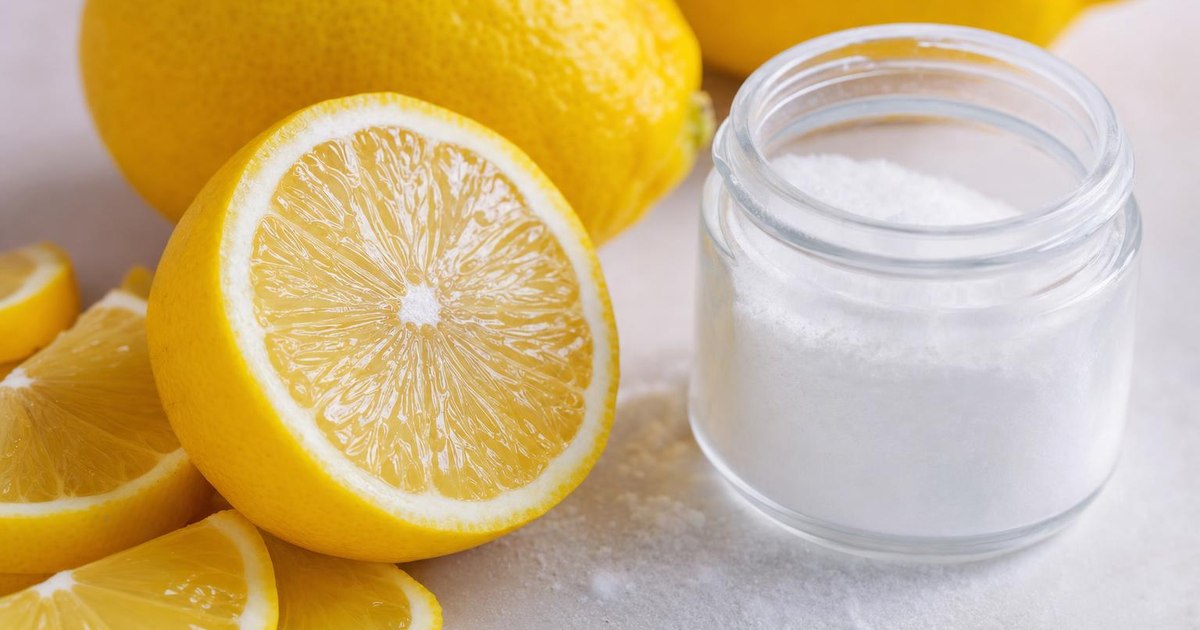
What is citric acid?
Citric acid is a weak organic acid with the formula C6H8O7. You will find it naturally in citrus fruit (lemons run about 5-8% by weight), strawberries, pineapples, and many other fruits. Unripe fruit carries more than ripe.
The molecule is also central to how every living cell produces energy. The citric acid cycle (also called the Krebs cycle or TCA cycle) is the biochemical loop that mitochondria use to convert fuel into ATP. Citric acid is not a foreign substance to the body.
As a food additive it carries the European designation E330. In food it serves three roles simultaneously: it lowers pH (inhibiting spoilage organisms), it provides sour flavor, and it chelates metal ions that would otherwise catalyze oxidation. This combination of preservation, flavor, and stability in one inexpensive ingredient is why citric acid became one of the most widely used food chemicals on the planet.
Where commercial citric acid actually comes from
This is the part that surprises most people.
When you see "citric acid" on an ingredient label, your brain probably pictures lemons. Historically, that association was accurate: prior to the 1920s, industrial citric acid was extracted from Italian lemons by crushing the fruit and crystallizing the acid from the juice. Sicily had a near-monopoly on supply.
That model collapsed after 1917, when American chemist James Currie discovered that the common black mold Aspergillus niger, grown on a sugar substrate under specific conditions of low pH and high oxygen, secreted citric acid in large quantities. By 1923, Pfizer was producing citric acid commercially via mold fermentation, and within two decades the citrus-extraction model was effectively obsolete.
Today, approximately 99% or more of the world's commercial citric acid (roughly 2 million metric tons per year) is produced by Aspergillus niger fermentation. Manufacturers grow the mold on carbohydrate feedstocks: cane sugar, corn syrup, or beet molasses depending on region and cost. The mold converts the sugars into citric acid, which is then filtered, purified, and crystallized. The final product is chemically identical to citric acid from a lemon. No Aspergillus niger cells or viable mold are present in the finished ingredient.
The molecule is the same. The production method is different from what most consumers assume. These are both true.
Is citric acid safe? Regulatory positions
FDA
The FDA classifies citric acid as generally recognized as safe (GRAS) under 21 CFR 184.1033. Citric acid is permitted as a direct food ingredient with no specified upper limit on use level. Applications include pH control, flavoring, and preservation. It is also permitted as a sequestrant, helping to bind trace metals that would otherwise accelerate rancidity or discoloration.
There is no FDA advisory, ongoing safety review, or rulemaking concerning citric acid. It sits in an uncomplicated regulatory position.
Health Canada
Health Canada permits citric acid under the Food and Drug Regulations, Division 16, covering food additives that are miscellaneous ingredients including pH adjusters and preservatives. It is permitted broadly across food categories. Health Canada has not issued consumer advisories regarding citric acid.
EFSA
The European Food Safety Authority's Panel on Food Additives and Nutrient Sources (ANS Panel) completed a full re-evaluation of citric acid in 2017, published in the EFSA Journal as DOI: 10.2903/j.efsa.2018.5124. The panel's conclusion was that there were no safety concerns at current permitted uses and exposure levels. EFSA did not establish a numerical acceptable daily intake (ADI), meaning the data did not indicate any need to restrict intake.
That is a meaningful statement: most additives under formal EFSA review receive a numerical ADI as a precautionary ceiling. Citric acid was evaluated and found not to need one.
WHO/JECFA
The Joint FAO/WHO Expert Committee on Food Additives assigned citric acid an ADI of "not specified." In JECFA's framework, "not specified" is the highest safety category the committee uses. It applies to substances with very low toxicity, where evidence indicates the total dietary intake arising from uses at levels necessary to achieve the desired effect does not represent a hazard to health. JECFA has never set an upper intake limit for citric acid.
EU listing
Citric acid is authorized as E330 across all food categories in the EU under the "quantum satis" rule, meaning it can be used at the quantity sufficient to achieve the intended technological purpose, with no fixed maximum level.
What citric acid does in food
Citric acid earns its ubiquity by solving several problems at once.
pH control and preservation. Most spoilage bacteria and many pathogens cannot thrive at pH below 4.5. Adding citric acid to bring a food's pH below this threshold is one of the oldest and most effective preservation strategies used in industrial food production. Canned tomatoes, jams, acidified dressings, and soft drinks all exploit this effect.
Flavor. Citric acid is what makes sour candy taste sour and lemonade taste sharp rather than just sweet. It delivers a clean, citrus-associated tartness that is distinct from other food acids (acetic, malic, tartaric). At low concentrations it brightens flavor without being noticeable as an independent note. At higher concentrations it becomes the dominant flavor characteristic.
Color preservation. In canned and bottled tomato products, citric acid slows the oxidation of lycopene and other pigments, keeping the product looking red rather than brown. In fruit-containing products it slows enzymatic browning. In meat and fish it chelates the iron and copper ions that catalyze lipid oxidation and off-flavor development.
Antioxidant synergy. Citric acid chelates metals that would otherwise blunt the effectiveness of vitamin C and other antioxidants in the product.
The 2018 Sweis and Cressey case series
In 2018, Kathleen Sweis and Brent Cressey published a paper in Toxicology Reports titled "A systemic review of the manifestations and mechanisms of action of potential hazardous ingredients of 'citric acid' as it pertains to the manufacturing of citric acid." The paper documented 4 case studies: individuals who reported symptoms including joint inflammation and pain, bladder irritation, and asthma-like respiratory effects after consuming products containing manufactured citric acid. When these individuals stopped consuming manufactured-citric-acid products, symptoms reportedly resolved.
The mechanism Sweis and Cressey proposed was not the citric acid molecule itself but trace residues from the Aspergillus niger fermentation process: mycotoxins, fungal proteins, or fermentation metabolites that survive purification and may trigger immune responses in sensitive individuals.
This paper has circulated widely in consumer health communities. It is worth treating fairly.
What the paper is: a documented case series with a plausible mechanistic hypothesis about a sensitivity that appears to be real for some people.
What it is not: a controlled study, a replicated finding, or evidence of general population risk. Four case studies cannot establish prevalence. No subsequent controlled trial has confirmed the mechanism. No regulatory body has cited it as a basis for any restriction.
The honest read: citric acid sensitivity exists for some people. The mechanism is not fully characterized. The affected population appears to be small. Regulatory risk assessment for the general population remains unaffected by this paper. If you suspect you might be in the sensitive group, the evidence is not strong enough to panic, but it is real enough that an elimination trial makes sense as a first step.
Where you will find citric acid
Citric acid is in more products than most people realize. It appears across virtually every food category:
- Soft drinks and energy drinks (as flavor and pH adjuster)
- Sour and fruit-flavored candies (in very high concentrations on some coatings)
- Jams, jellies, and fruit preserves
- Canned and packaged tomato products
- Salad dressings and condiments
- Cheese products (some processed and flavored cheeses)
- Frozen foods with sauce components
- Snack seasonings
- Infant formula and nutritional supplements
It also appears in personal care products, cleaning products, and medications, though those exposures are outside the food safety discussion.
On a food label it appears as "citric acid" almost universally. It is rarely obscured by other labeling conventions, unlike some additives. One gap: when it appears as a component of a "natural flavor" blend, it may not be separately disclosed, though this is uncommon.
Verified products containing E330
Five products verified against OpenFoodFacts (May 2026):
| Product | Brand | OFF Barcode | Nova Group | Nutri-Score |
|---|---|---|---|---|
| Energy Drink | Red Bull | 90162602 | 4 | E |
| Diet Coke | Coca-Cola | 04965802 | 4 | C |
| Tajin Clasico seasoning | Tajin | 0633148100013 | 3 | D |
| Fruit Snacks | Welch's | 0034856008187 | 4 | D |
| Mac & Cheese | Kraft | 0021000658831 | 4 | A |
The Nova Group 4 designation on most of these reflects the overall product context, not the citric acid specifically. Tajin's Nova Group 3 rating reflects its simpler ingredient composition.
Health considerations
Dental erosion
Acidic foods and drinks cause enamel erosion with repeated or prolonged exposure. Citric acid is among the stronger food acids (pKa around 3.1 for the first dissociation), and sour candies coated in citric acid can drop oral pH to levels that measurably soften enamel within minutes of contact.
The risk is pattern, not occasional consumption. Rinsing with water after acidic foods, using a straw for acidic beverages, and waiting 30 minutes before brushing are the standard dental recommendations.
Iron absorption
On the positive side, citric acid enhances the absorption of non-heme iron (the form of iron in plant foods and fortified products) by keeping iron in its soluble, reducible ferrous form in the acidic environment of the stomach and upper small intestine. This is the same mechanism by which vitamin C improves iron absorption. Eating vitamin C-rich citrus alongside iron-containing plant foods takes advantage of this effect. Citric acid in a fortified food or supplement can serve a similar function.
For people managing iron-deficiency anemia or eating plant-based diets, this is nutritionally meaningful.
The Aspergillus connection
The mold fermentation origin raises a practical question: could residual fungal material in the final product cause reactions in mold-sensitive individuals? The Sweis and Cressey case series proposed this mechanism. Commercial purification processes are designed to remove mold cells, proteins, and metabolites, and regulatory standards require a clean final product. Whether trace quantities survive at levels sufficient to trigger reactions in sensitive individuals is not settled. The case series suggests this may happen for some people. The absence of controlled trials means the frequency and mechanism remain uncharacterized.
FAQ
Is citric acid bad for you?
For most people, no. The FDA, Health Canada, EFSA, and WHO/JECFA all classify it as safe with no intake limit required. A small number of people report sensitivity reactions to manufactured citric acid, documented in a 2018 case series of 4 individuals. A real signal, but not evidence of general population risk.
Where does citric acid come from?
Naturally, from lemons, limes, and many other fruits. Commercially (what you find on labels): from Aspergillus niger mold grown on corn syrup or molasses, then purified and crystallized. The final molecule is chemically identical to citric acid from a lemon.
Is citric acid natural?
The molecule is the same as in fruit. The production method is industrial fermentation that most consumers do not expect. US regulatory language calls it "naturally derived." Whether that meets your definition of natural is a separate question from whether it is safe.
Can you be allergic to citric acid?
True IgE-mediated citric acid allergy is extremely rare. More common: citrus allergy (a reaction to citrus proteins, not citric acid) or sensitivity to manufactured citric acid where residual fermentation material may be the trigger. An elimination trial is the practical first step if you suspect a reaction.
Does citric acid damage your teeth?
With prolonged contact, yes. Sour candies with high citric acid content can reach very low pH values and measurably soften enamel. Occasional consumption is not a concern for most people. Using a straw, rinsing with water after acidic foods, and waiting 30 minutes before brushing are standard recommendations.
Does citric acid cause inflammation?
The 2018 Sweis and Cressey case series reported joint inflammation in 4 individuals linked to manufactured citric acid. No controlled study has confirmed this. The proposed mechanism involves residual fermentation compounds, not the citric acid molecule itself. For people without sensitivity history, there is no evidence of inflammation risk.
Is citric acid safe during pregnancy?
No authority has issued pregnancy-specific restrictions. Citric acid is present in fruits and vegetables actively recommended during pregnancy. If you have a personal sensitivity to manufactured citric acid, that applies in pregnancy as it would at any other time.
Sources
-
FDA. 21 CFR 184.1033: Citric acid. Electronic Code of Federal Regulations. https://www.ecfr.gov/current/title-21/chapter-I/subchapter-B/part-184/subpart-B/section-184.1033
-
EFSA ANS Panel. Re-evaluation of citric acid (E 330) as a food additive. EFSA Journal. 2018;16(6):5124. https://doi.org/10.2903/j.efsa.2018.5124
-
WHO/JECFA. Citric acid. In: Safety evaluation of certain food additives. WHO Food Additives Series. ADI "not specified" status.
-
Sweis IE, Cressey BC. Potential role of the common food additive manufactured citric acid in eliciting significant inflammatory reactions contributing to serious disease states: A series of four case reports. Toxicology Reports. 2018;5:808-812. https://doi.org/10.1016/j.toxrep.2018.08.002
-
Currie JN. The citric acid fermentation of Aspergillus niger. Journal of Biological Chemistry. 1917;31(1):15-37. (Foundational fermentation discovery.)
-
Berovic M, Legisa M. Citric acid production. Biotechnology Annual Review. 2007;13:303-343. https://doi.org/10.1016/S1387-2656(07)13011-8
-
Vandenberghe LPS, Soccol CR, Pandey A, Lebeault JM. Microbial production of citric acid. Brazilian Archives of Biology and Technology. 1999;42(3):263-276.
-
American Dental Association. Erosion: what you eat and drink can impact teeth. ADA Mouth Healthy. https://www.mouthhealthy.org/en/az-topics/e/erosion
-
Hallberg L, Brune M, Rossander L. Effect of ascorbic acid on iron absorption from different types of meals. Human Nutrition: Applied Nutrition. 1986;40(2):97-113. (Iron absorption / organic acid mechanism.)
-
Health Canada. Food and Drug Regulations, Division 16: Food additives that may be used as pH adjusting agents, acid-reacting materials, water correcting agents. Government of Canada. https://www.canada.ca/en/health-canada/services/food-nutrition/food-safety/food-additives/lists-permitted/7-ph-adjusting.html
-
European Commission. Regulation (EC) No 1333/2008 on food additives, Annex II, E330. Official Journal of the European Union.
-
Cavallo D, Ursini CL, Carelli G, et al. Occupational exposure assessment in a citric acid production plant. Annals of Occupational Hygiene. 2003;47(3):209-215. (Aspergillus niger fermentation occupational context.)
-
OpenFoodFacts. Product data for E330-containing products. https://world.openfoodfacts.org. Retrieved May 2026.
Frequently asked questions
Common questions about this ingredient.
Is citric acid bad for you?
For the vast majority of people, citric acid at amounts found in food is not harmful. Every major food safety authority (the FDA, Health Canada, EFSA, and WHO/JECFA) has reviewed the evidence and concluded it is safe. JECFA's 'ADI not specified' classification is the highest safety category the body assigns, meaning no upper limit was deemed necessary given current evidence. A small number of people report sensitivity reactions (joint pain, inflammation, digestive upset), particularly to manufactured citric acid. The evidence base for this is limited: a 2018 paper by Sweis and Cressey in Toxicology Reports documented 4 case studies. It is a real signal worth knowing about, but it is not evidence of general risk.
Where does citric acid come from?
In nature, citric acid is found in citrus fruit (especially lemons and limes), strawberries, pineapples, and many other fruits. It is a normal intermediate in human metabolism. The citric acid cycle (Krebs cycle) is what every cell runs for energy. Commercial citric acid is almost never extracted from citrus. Since the 1920s, manufacturers have produced it by fermenting carbohydrate feedstocks (cane sugar, corn syrup, molasses) using a strain of the mold Aspergillus niger. This is cheaper, faster, and far more scalable than squeezing citrus. Today, roughly 2 million metric tons of citric acid are produced this way each year.
Is citric acid natural?
The molecule itself is identical whether it comes from a lemon or a fermentation tank: the chemistry is the same. Whether you consider it 'natural' depends on what the word means to you. Citric acid from citrus is natural in the way most consumers understand the term. Citric acid from Aspergillus niger fermentation is classified as 'naturally derived' in US regulatory language, meaning it originated from a biological process, but the production method is an industrial one. Many consumers are surprised to learn that the citric acid in their soda or candy was made by mold grown on corn syrup, not pressed from lemons. That fact does not change the safety profile, but it is a legitimate transparency point.
Can you be allergic to citric acid?
True IgE-mediated citric acid allergy is exceedingly rare. What is sometimes called a 'citric acid allergy' is usually one of two things: a citrus fruit allergy (which is a reaction to proteins in citrus, not to citric acid itself) or a sensitivity to manufactured citric acid. The 2018 Sweis and Cressey case series documented 4 individuals who reported symptoms including joint pain, inflammation, and asthma-like reactions when consuming products containing manufactured citric acid but not when consuming natural citric acid from fruit. The mechanism proposed was residual Aspergillus niger proteins or metabolites in the final product triggering immune responses. This is not well-characterized in the literature, and the case series is small. If you suspect sensitivity, an elimination trial (cutting all manufactured-citric-acid products for several weeks) is the standard self-diagnostic approach before pursuing formal allergy testing.
Does citric acid damage your teeth?
Yes, repeated or prolonged acid contact with enamel causes erosion over time, and citric acid is one of the more acidic food acids. The risk is about contact pattern, not occasional consumption. Slowly sipping an acidic citric-acid-containing drink over an hour is harder on enamel than drinking it quickly. The American Dental Association recommends drinking acidic beverages through a straw, rinsing with water after, and waiting 30 minutes before brushing (brushing on softened enamel worsens erosion). Sour candies (which combine citric acid with sugar) are among the more aggressive products for enamel because they combine low pH with prolonged oral contact.
Is citric acid safe during pregnancy?
No food safety authority has issued a specific pregnancy warning for citric acid. The FDA's GRAS classification, EFSA's 2017 reassessment, and WHO/JECFA's 'ADI not specified' status all apply to the general population, which includes pregnant people. Citric acid is present in fruits and vegetables that are actively recommended during pregnancy, which reflects the consensus that the molecule itself is not a concern at typical dietary exposures. If you have a known sensitivity to manufactured citric acid, that personal consideration still applies during pregnancy, as with any period when you would take extra dietary care.
Why is citric acid in so many foods?
Three reasons it is practically everywhere: it controls pH (keeping it below 4.5 inhibits bacterial and mold growth), it provides a clean sour flavor that balances sweetness, and it chelates metal ions that would otherwise accelerate oxidation and cause off-flavors or color changes. It is cheap, water-soluble, effective at low concentrations, and regarded as safe. It works in acidic beverages, jams, canned tomatoes, candy, dressings, frozen foods, meat products, and cosmetics. In canned tomatoes it also preserves the bright red color by preventing oxidation of lycopene. The combination of preservation, flavor, and stability in one inexpensive ingredient is why food manufacturers default to it.
The app reads ingredient labels with your camera and flags this and hundreds of other additives in seconds.
